What Are Spare Parts? How They Work, Benefits, and Applications
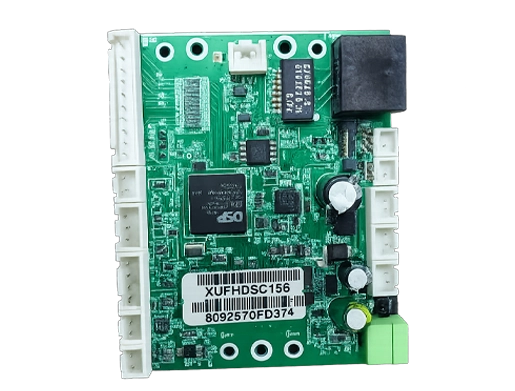
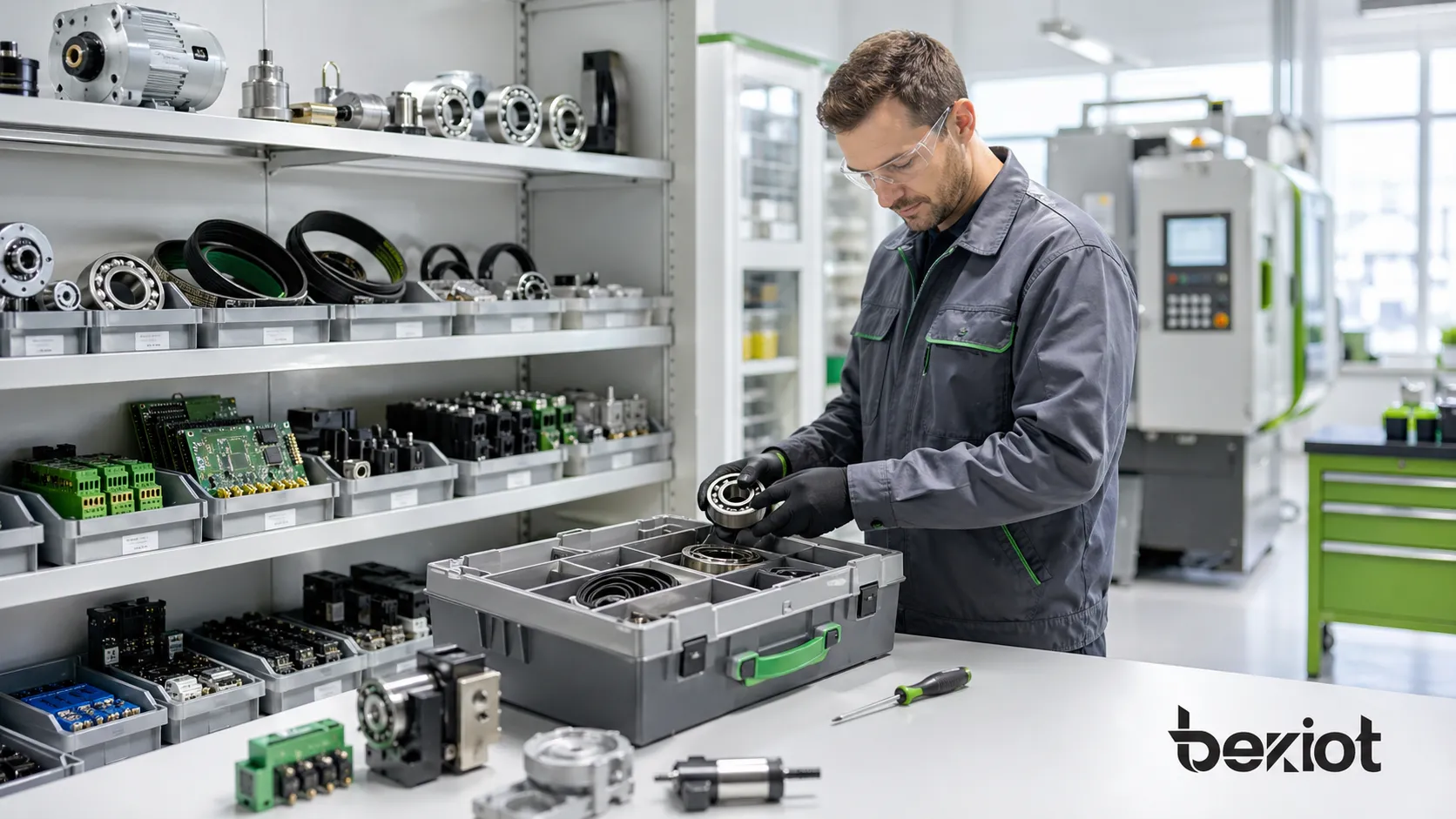
Spare parts are replacement components, modules, assemblies, or consumable items kept available so that equipment, machines, vehicles, systems, or devices can be repaired, restored, maintained, or upgraded when needed. They may be simple items such as screws, seals, filters, fuses, belts, connectors, switches, bearings, and cables, or more complex parts such as circuit boards, motors, sensors, pumps, power supplies, gearboxes, displays, control modules, and communication units.
The main purpose of spare parts is to keep operations running when components wear out, fail, become damaged, reach the end of their service life, or need planned replacement. In many organizations, spare parts are not only warehouse items. They are part of reliability management, maintenance planning, asset lifecycle control, production continuity, safety assurance, and service response.
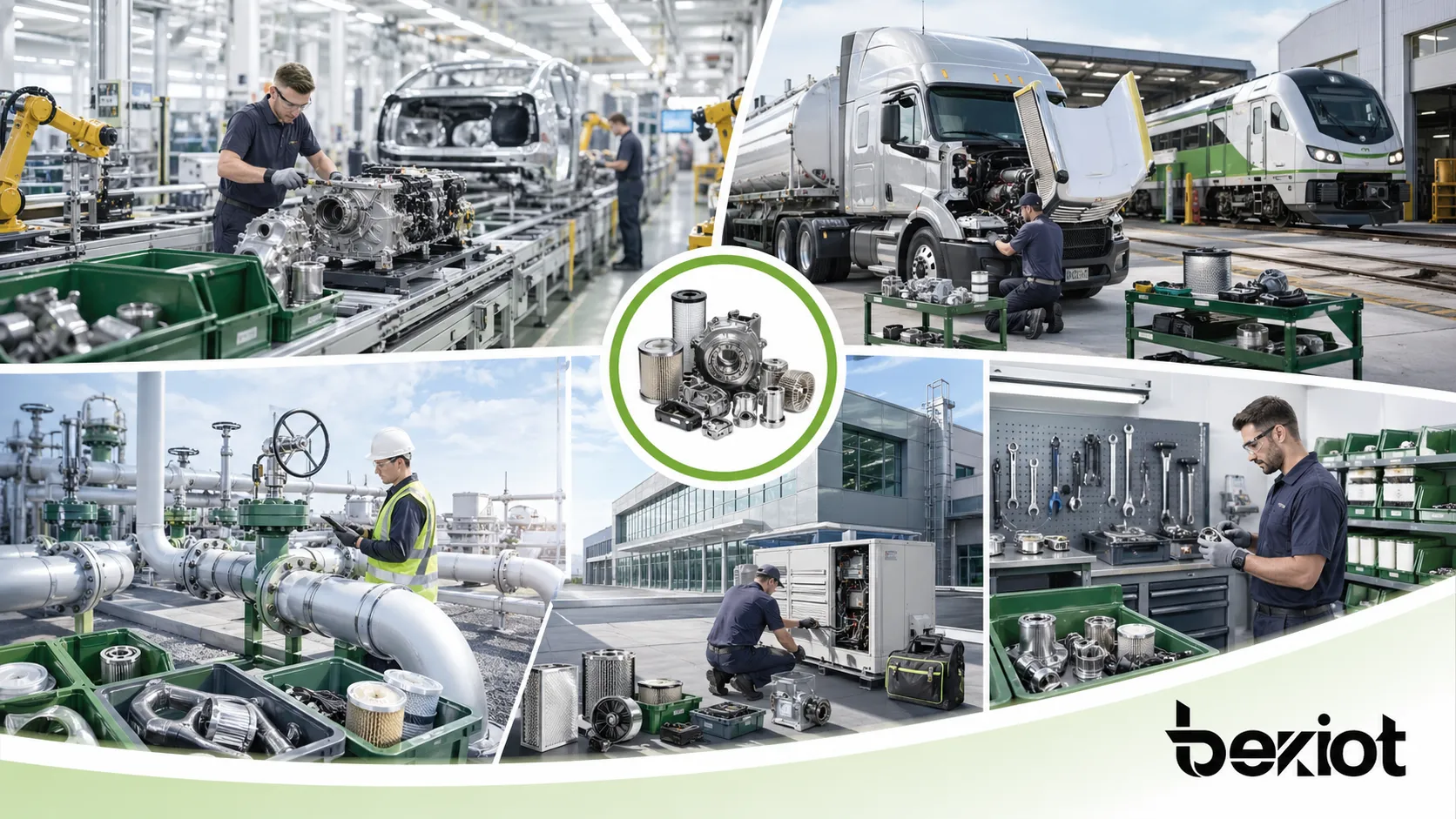
Spare parts are widely used in manufacturing, transportation, energy, oil and gas, mining, utilities, construction, healthcare, telecommunications, data centers, facility management, automotive service, marine operations, aviation, public infrastructure, and commercial equipment maintenance. Wherever equipment downtime has cost, risk, or safety impact, spare parts become an important part of operational readiness.
What Are Spare Parts?
Definition and Core Meaning
Spare parts are parts reserved for replacing failed, worn, damaged, or outdated components in equipment or systems. They allow maintenance teams to restore normal operation without waiting for every required component to be ordered after a failure occurs. In practical terms, spare parts create a bridge between equipment failure and service recovery.
The core meaning of spare parts is availability for replacement. A machine, vehicle, control system, communication device, pump, motor, or production line may depend on many individual components. If one important part fails and no replacement is available, the entire system may stop. Spare parts reduce this risk by keeping critical items ready before they are urgently needed.
Spare parts may be stored by equipment owners, service providers, maintenance contractors, distributors, manufacturers, or field service teams. The right storage strategy depends on equipment importance, failure frequency, lead time, cost, shelf life, and operational impact.
Spare parts are not simply extra components. They are a practical reserve that helps turn equipment failure into a controlled maintenance action.
Why Spare Parts Matter
Spare parts matter because downtime can be expensive and disruptive. A small part may stop a large system if no replacement is available. A failed bearing may stop a conveyor. A damaged sensor may affect process control. A broken power supply may shut down a communication device. A worn seal may create leakage and safety risk.
When spare parts are available, maintenance teams can respond faster. They can replace the failed part, test the system, and return equipment to service with less delay. Without spare parts, the organization may need to wait for procurement, shipping, customs clearance, supplier confirmation, or production lead time.
In critical operations, spare parts support reliability, safety, and continuity. They help organizations avoid turning every component failure into a long outage.
How Spare Parts Work
From Failure Detection to Replacement
Spare parts work as part of a maintenance process. First, a problem is detected through inspection, alarm, fault code, operator report, condition monitoring, scheduled maintenance, or equipment failure. The maintenance team then identifies the faulty part, checks the required specification, confirms part availability, and replaces the component.
After replacement, the equipment is usually tested to confirm that the fault has been resolved. The used part may be discarded, repaired, refurbished, returned to the supplier, or analyzed for failure cause. The spare part inventory should then be updated so that the consumed item can be replenished if needed.
This process shows why spare parts are connected to more than storage. They depend on accurate documentation, part identification, technical knowledge, inventory control, and maintenance workflow.
Planned Maintenance and Preventive Replacement
Spare parts are not only used after failure. They are also used in planned maintenance. Many components have expected wear patterns or service intervals. Filters, belts, seals, lubricants, batteries, brake pads, gaskets, and certain electrical components may be replaced before failure to reduce risk.
Preventive replacement is useful when failure could cause larger damage, production stoppage, safety risk, or expensive emergency repair. By replacing parts during scheduled downtime, organizations can avoid unexpected interruptions and plan labor, tools, permits, and spare part usage more efficiently.
In this model, spare parts support planned reliability rather than only emergency response.
Inventory Replenishment and Stock Control
After a spare part is used, the inventory level changes. If the part is important, the system should trigger replenishment based on minimum stock level, reorder point, maintenance forecast, or criticality rule. This keeps the spare part reserve from being silently depleted.
Stock control is essential because spare parts only help when they are actually available, identifiable, and usable. A warehouse may contain many parts, but if the needed item is missing, mislabeled, expired, damaged, or incompatible, the maintenance team may still face downtime.
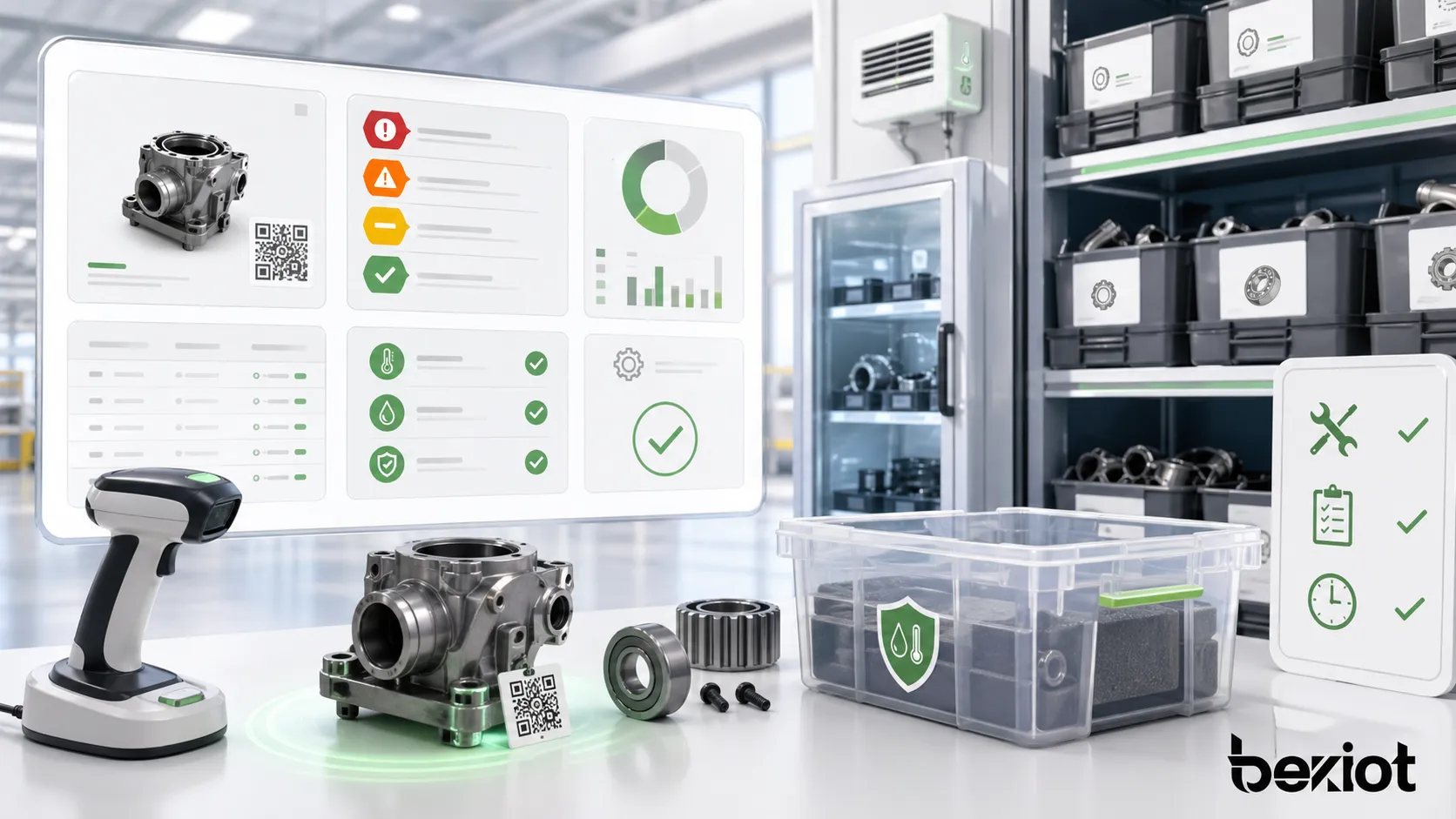
Good spare parts management therefore includes part numbering, labeling, storage conditions, inventory records, supplier data, reorder rules, and periodic stock verification.
A spare part is useful only when it is the right part, in the right condition, available at the right time.

Main Types of Spare Parts
Consumable Spare Parts
Consumable spare parts are items expected to be used, replaced, or depleted during normal operation or maintenance. These include filters, gaskets, seals, lubricants, fuses, lamps, cartridges, belts, cleaning parts, brake pads, and similar items. They usually have predictable demand because they are replaced during routine service intervals.
Consumable parts are often easier to manage than rare critical parts because their usage can be forecast from maintenance schedules and operating hours. However, they still require proper stock levels. If a common consumable is missing, routine maintenance may be delayed.
These parts are usually stored in larger quantities, especially when equipment fleets, production lines, or facility systems use the same item repeatedly.
Wear Parts
Wear parts are components that gradually deteriorate due to friction, vibration, heat, pressure, corrosion, chemical exposure, or repeated movement. Examples include bearings, gears, bushings, rollers, seals, cutting tools, chains, nozzles, brushes, liners, and mechanical contact parts.
Wear parts may not fail suddenly at first. Their performance may decline over time. If they are not replaced, they can damage other components, reduce efficiency, increase energy use, or create safety problems. Maintenance teams often track wear parts through inspections, operating hours, vibration data, or condition monitoring.
Keeping wear parts available helps organizations perform maintenance before small deterioration becomes major failure.
Critical Spare Parts
Critical spare parts are components whose failure can stop production, interrupt service, create safety risk, or cause major financial loss. They may be expensive, rarely used, or have long lead times. Examples include specialized circuit boards, control modules, motors, pumps, drives, compressors, sensors, communication modules, or custom mechanical assemblies.
Critical parts are not always the most frequently used items. A part may sit unused for years, but if it fails and no replacement exists, the impact may be severe. This makes critical spare parts a strategic reliability decision rather than a simple purchasing choice.
Organizations should identify critical parts through risk assessment, downtime cost, lead time, equipment importance, supplier availability, and failure consequence.
Repairable and Rotable Parts
Some spare parts are repairable rather than disposable. A failed module, motor, gearbox, pump, or electronic assembly may be removed from service, replaced with a spare, then repaired and returned to inventory. In some industries, these are called rotable parts because they rotate between installed use, repair, and stock.
Repairable parts can reduce long-term cost when the item is expensive and can be restored reliably. However, they require tracking, repair standards, test procedures, warranty control, and clear status labeling so that serviceable and unserviceable items are not confused.
This model is common in aviation, marine, heavy industry, utilities, transportation, and complex equipment maintenance.
Key Features of Spare Parts Management
Part Identification and Standardization
Accurate part identification is one of the most important features of spare parts management. A single machine may contain many similar-looking parts with different ratings, dimensions, materials, firmware versions, connectors, voltages, or certifications. Using the wrong part can cause failure, safety risk, or compatibility problems.
Part numbers, descriptions, drawings, equipment manuals, serial numbers, supplier references, and technical specifications should be recorded clearly. Standardization also helps. When multiple systems use common parts, inventory becomes easier to manage and stock turnover improves.
Good identification reduces mistakes and speeds up maintenance response.
Criticality Classification
Criticality classification helps decide which spare parts should be stocked, how many should be stored, and how urgently they should be replenished. Parts can be grouped by operational impact, failure probability, lead time, safety relevance, cost, and availability from suppliers.
A low-cost part with high failure frequency may need regular stock. A high-cost part with rare demand may still need stock if its failure would stop a critical system. A non-critical part with short delivery time may not need to be stored locally.
Classification prevents inventory decisions from being based only on price or habit. It connects spare parts strategy to real operational risk.
Storage Condition and Shelf Life
Spare parts must remain usable while stored. Some parts can be stored for years with little concern. Others may degrade due to humidity, dust, temperature, corrosion, ultraviolet light, static electricity, chemical exposure, or battery aging. Rubber seals, electronic boards, lubricants, adhesives, batteries, and certain sensors may have shelf-life limits.
Storage conditions should match the part type. Electronics may need anti-static packaging. Rubber parts may need protection from heat and sunlight. Metal parts may need corrosion protection. Precision parts may require dust-free packaging or controlled handling.
A spare part that has degraded in storage may fail soon after installation, so storage quality is part of reliability.
Benefits of Spare Parts
Reduced Downtime
The most direct benefit of spare parts is reduced downtime. When a required part is available, repairs can begin immediately or shortly after failure diagnosis. This is especially important for production lines, utility systems, transport equipment, communication networks, hospital systems, and safety equipment.
Without spare parts, even a minor failure may cause a long outage while the organization waits for delivery. If the part is imported, customized, discontinued, or affected by supplier delays, downtime may become much longer than expected.
Spare parts reduce this waiting time and help maintenance teams restore service faster.
Improved Equipment Reliability
Spare parts support reliability by enabling timely maintenance. When replacement parts are available, worn components can be changed during planned service instead of being forced to run until failure. This reduces stress on related parts and helps equipment operate within normal conditions.
Reliability also improves when the correct spare parts are used. Genuine, compatible, or properly specified parts help maintain the original performance and safety level of the equipment. Poor-quality or incorrect substitutes may create repeated faults.
Spare parts therefore contribute to both repair speed and long-term equipment health.
Better Maintenance Planning
Spare parts make maintenance planning more predictable. If parts are available before a planned shutdown, the maintenance team can schedule labor, tools, access permits, and testing more efficiently. This reduces uncertainty and makes shutdown windows easier to control.
Maintenance planning is especially important in facilities where downtime must be approved in advance. Production plants, hospitals, airports, utilities, data centers, and transportation systems often cannot stop equipment randomly. Spare parts help align maintenance with operational schedules.
Good planning reduces emergency work and improves service quality.
Lower Long-Term Cost
Spare parts can reduce long-term cost by preventing extended downtime, emergency shipping, overtime labor, secondary equipment damage, and rushed purchasing. Although inventory has a carrying cost, the cost of not having a critical part can be much higher.
The goal is not to store every possible component. Excessive inventory ties up capital and may create waste. The goal is to store the right parts based on risk, demand, lead time, and maintenance strategy.
A well-balanced spare parts program reduces total cost by avoiding both shortages and unnecessary stock.
Applications of Spare Parts
Manufacturing and Production Lines
Manufacturing facilities depend on spare parts for conveyors, motors, drives, sensors, controllers, pneumatic systems, hydraulic units, robots, packaging machines, machine tools, and inspection equipment. A single failed component may stop a production line, delay orders, or reduce product quality.
Spare parts support preventive maintenance, emergency repair, line changeover, and reliability improvement. Common items may be stored near the production area, while critical parts may be stored in a controlled maintenance warehouse.
In manufacturing, spare parts availability is directly connected to production continuity.
Transportation and Fleet Maintenance
Transportation systems and vehicle fleets use spare parts for engines, braking systems, tires, lighting, batteries, sensors, electronic modules, communication units, doors, pumps, filters, and safety systems. Vehicles must be maintained to remain safe, compliant, and available for operation.
Spare parts help reduce vehicle downtime and support scheduled service. In rail, aviation, marine, bus, logistics, and emergency vehicle operations, part availability can affect service schedules and public safety.
Fleet maintenance often uses a combination of consumable parts, critical parts, and repairable assemblies.
Energy, Utilities, and Industrial Infrastructure
Power plants, substations, water treatment facilities, oil and gas sites, mining operations, and utility networks rely on spare parts for pumps, valves, drives, transformers, sensors, control systems, communication equipment, safety devices, and mechanical systems. Many of these assets are expensive and difficult to replace quickly.
Spare parts help maintain service continuity in infrastructure that communities and industries depend on. They also support safety, environmental protection, and emergency response because failures in utility systems can have wide consequences.
In these sectors, spare parts planning is often linked to risk management and regulatory obligations.
Facility Management and Building Systems
Buildings use spare parts for HVAC systems, elevators, access control, lighting, fire alarm systems, pumps, plumbing, electrical panels, security cameras, doors, and communication systems. Facility teams use spare parts to keep buildings comfortable, safe, and operational.
Some building parts are replaced frequently, such as filters and lamps. Others are critical because failure affects safety or access, such as fire alarm components, elevator parts, emergency lighting batteries, or door control modules.
A well-organized spare parts system helps facility teams respond quickly to tenant, staff, visitor, and safety needs.
Spare Parts in Maintenance Strategies
Corrective Maintenance
Corrective maintenance happens after a fault or failure is found. Spare parts are essential in this strategy because the repair depends on replacing or restoring the failed component. The faster the part can be identified and obtained, the faster the system can return to operation.
Corrective maintenance is unavoidable because not every failure can be predicted. However, relying only on corrective maintenance without spare parts planning can create long delays and emergency costs.
Spare parts make corrective maintenance more controlled and less disruptive.
Preventive Maintenance
Preventive maintenance replaces parts according to time, usage, operating hours, cycles, or manufacturer recommendations. Spare parts must be available before the scheduled maintenance window. This avoids delays and allows work to be completed within planned downtime.
Preventive spare parts usually include filters, seals, belts, lubricants, gaskets, batteries, wear parts, and inspection-related replacement items. Demand can often be forecast from maintenance schedules.
This strategy helps reduce unexpected failure and supports stable asset performance.
Predictive and Condition-Based Maintenance
Predictive maintenance uses condition data to decide when parts should be replaced. Vibration, temperature, pressure, electrical current, oil analysis, acoustic signals, fault logs, and sensor data may indicate that a component is beginning to fail.
Spare parts still matter in predictive maintenance. When data shows that failure is likely, the replacement part must be available before the planned intervention. Otherwise, the organization may know a failure is coming but still be unable to act quickly.
Condition-based spare parts planning can reduce unnecessary replacement while still preventing major failures.
Spare Parts Management Process
Demand Forecasting
Demand forecasting estimates which spare parts will be needed, how often they will be used, and when they should be replenished. Forecasting may be based on historical consumption, equipment population, maintenance schedules, failure data, supplier lead time, and operating intensity.
Good forecasting prevents both stockouts and overstocking. If demand is underestimated, parts may be unavailable during failure. If demand is overestimated, inventory cost increases and parts may become obsolete or expire.
Forecasting is most effective when maintenance records and inventory data are accurate.
Reorder Point and Safety Stock
A reorder point is the inventory level at which a new purchase or replenishment should be triggered. Safety stock is extra inventory kept to protect against uncertain demand or supplier delays. These tools help keep spare parts available without ordering randomly.
The reorder point should consider average usage, lead time, criticality, and risk. A critical part with long lead time may need higher safety stock than a low-cost part available locally within one day.
Reorder planning turns spare parts management into a controlled process rather than reactive purchasing.
Inventory Auditing
Inventory auditing checks whether recorded stock matches physical stock. It also verifies condition, labeling, location, shelf life, and usability. Audits are important because spare parts records can become inaccurate when parts are moved, used, returned, repaired, or replaced by alternate models.
A part that exists in the system but cannot be found in the warehouse is not truly available. A part that is present but damaged or expired is also not useful. Regular audits help keep inventory trustworthy.
Accurate inventory supports faster maintenance decisions and better purchasing control.
Selection Considerations
Compatibility and Specification
Spare parts must match the equipment specification. Compatibility includes physical dimensions, electrical ratings, material, firmware version, pressure rating, temperature range, certification, connector type, mounting method, and performance requirements.
A part that looks similar may not be suitable. For example, a fuse may have the wrong current curve, a seal may use the wrong material, a motor may have the wrong speed, or a circuit board may have incompatible firmware.
Correct specification prevents repeated failure and protects equipment safety.
Original, Equivalent, and Substitute Parts
Some organizations use original equipment manufacturer parts, while others use equivalent or substitute parts. Original parts may provide the clearest compatibility and warranty path. Equivalent parts may reduce cost or improve availability when properly verified. Substitute parts may be used when the original is discontinued or unavailable.
Any equivalent or substitute part should be technically evaluated before use. The evaluation should consider performance, safety, certification, warranty, operating environment, and long-term support.
Cost savings are useful only if the replacement part maintains reliable and safe operation.
Lead Time and Supplier Reliability
Lead time is a major factor in spare parts planning. A part that can be delivered locally within hours may not need large inventory. A custom or imported part with a long lead time may need to be stocked even if it is expensive.
Supplier reliability also matters. If a supplier frequently delays shipments, changes models, or has limited stock, the organization may need alternative sources or higher safety stock.
Spare parts strategy should reflect real supply chain behavior, not only catalog availability.
Common Challenges
Overstocking
Overstocking happens when too many spare parts are purchased and stored. This ties up capital, consumes warehouse space, increases management effort, and may lead to waste if parts expire or become obsolete.
Overstocking often occurs when parts are ordered without demand analysis or when teams react to past shortages by buying too much. A better approach is to classify parts by criticality and use data to set stock levels.
The goal is not maximum inventory. The goal is useful availability.
Stockouts
Stockouts occur when a required spare part is unavailable. This can delay repairs, extend downtime, increase emergency shipping cost, and force temporary workarounds. Stockouts are especially serious for critical equipment and long-lead-time parts.
Common causes include inaccurate inventory records, poor forecasting, weak reorder processes, supplier delays, undocumented part usage, and failure to replenish after maintenance work.
Stockouts can be reduced through better inventory control, reorder rules, audits, and maintenance planning.
Obsolescence
Obsolescence happens when spare parts are no longer supported, manufactured, compatible, or needed. This is common with electronic components, control systems, communication equipment, software-dependent modules, and old machinery.
Obsolete parts create risk because replacement becomes difficult. Organizations may need last-time buys, retrofit kits, modernization plans, or alternate part qualification.
Obsolescence management should be part of asset lifecycle planning, especially for long-life equipment.
Maintenance and Storage Tips
Label Parts Clearly
Clear labeling helps maintenance teams find the right part quickly. Labels should include part number, description, equipment compatibility, location, quantity, status, and any special handling requirement. For repaired items, serviceable and unserviceable status should be clearly separated.
Poor labeling creates confusion and can lead to wrong part installation. In emergency repairs, the risk of error increases when parts are hard to identify.
Good labeling is a simple but powerful spare parts practice.
Protect Parts During Storage
Spare parts should be stored according to their material and sensitivity. Electronics may need anti-static packaging. Metal parts may need corrosion protection. Rubber parts may need protection from heat, ozone, and sunlight. Batteries may need charge management and expiration tracking.
Storage areas should be organized, clean, dry, and secure. Critical parts may require controlled access so they are not used without documentation.
Proper storage keeps spare parts ready for use when they are needed most.
Review Inventory Regularly
Spare parts inventory should be reviewed regularly. Equipment changes, supplier changes, failure patterns, maintenance schedules, and operational priorities can all affect what parts should be stocked. A part that was critical five years ago may no longer be needed, while a new asset may require new spare parts.
Regular review helps remove obsolete items, adjust stock levels, update part records, and identify missing critical parts. It also helps align inventory with current operations rather than outdated assumptions.
Spare parts management is an ongoing process, not a one-time warehouse setup.
Conclusion
Spare parts are replacement components kept available for maintenance, repair, equipment recovery, and operational continuity. They include consumables, wear parts, critical parts, repairable parts, mechanical components, electrical items, electronic modules, and system-specific assemblies.
Spare parts work through a maintenance and inventory cycle that includes failure detection, part identification, replacement, testing, stock update, and replenishment. They also support preventive and predictive maintenance by making planned replacement possible before failure causes downtime.
The main benefits of spare parts include reduced downtime, improved reliability, faster maintenance response, better planning, lower emergency cost, extended asset life, and safer operation. Their applications cover manufacturing, transportation, utilities, energy, facility management, healthcare, telecommunications, infrastructure, and many other technical environments. When managed carefully, spare parts are a strategic tool for keeping equipment and operations reliable.
FAQ
What are spare parts in simple terms?
Spare parts are replacement components kept available so that equipment can be repaired or maintained when a part fails, wears out, or needs scheduled replacement.
They help reduce downtime and keep systems operating reliably.
Why are spare parts important?
Spare parts are important because they allow maintenance teams to repair equipment faster. Without the right spare part, a small failure can cause a long delay, production stoppage, or service interruption.
They are especially important for critical equipment with long supplier lead times or high downtime cost.
What are examples of spare parts?
Examples of spare parts include filters, seals, bearings, belts, fuses, cables, sensors, motors, pumps, valves, circuit boards, power supplies, control modules, batteries, connectors, and mechanical assemblies.
The right spare parts depend on the equipment type, maintenance strategy, operating environment, and criticality.