


A vandal-resistant telephone is a rugged communication terminal designed for locations where ordinary phones may be damaged, abused, exposed to weather, or used by the public in uncontrolled environments. It is commonly installed in transportation systems, industrial sites, correctional facilities, public buildings, campuses, tunnels, parking areas, and outdoor emergency help points where voice communication must remain available even when the environment is harsh or the risk of intentional damage is high.
Unlike a standard office phone, a vandal-resistant telephone focuses on physical protection, long service life, simple operation, and dependable emergency access. Its enclosure, handset, keypad, cable, speaker, microphone, mounting structure, and internal electronics are usually designed to resist impact, pulling, dust, rain, corrosion, tampering, and frequent public use.
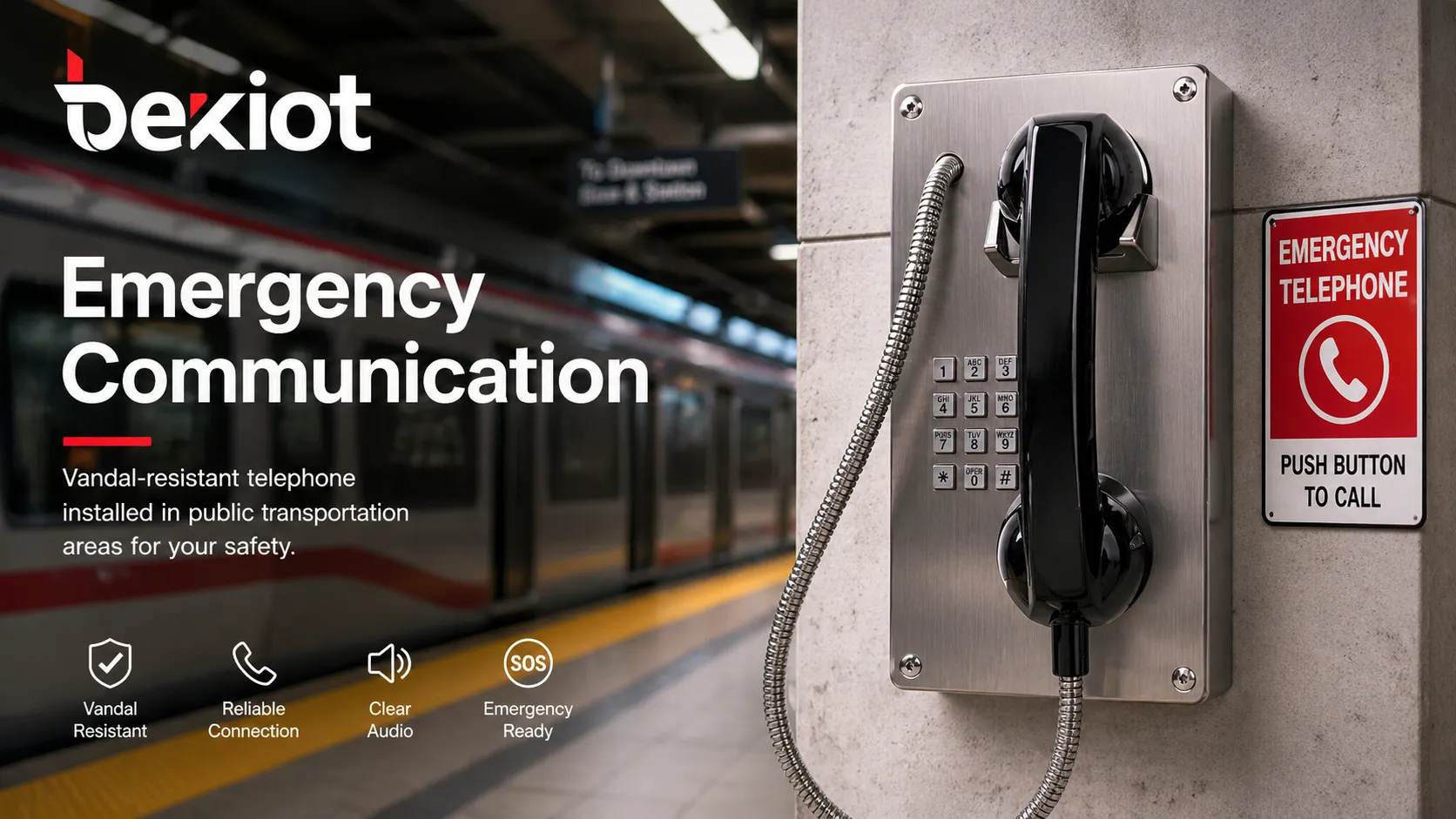
What Is a Vandal-Resistant Telephone?
A Rugged Phone for Demanding Environments
A vandal-resistant telephone, also called an anti-vandal telephone or rugged public telephone, is built to survive conditions that would quickly damage a normal telephone. It may use stainless steel, die-cast aluminum, cold-rolled steel, reinforced engineering plastics, armored cords, tamper-resistant screws, sealed keypads, and weatherproof gaskets to protect the device from physical abuse and environmental exposure.
Related Product Introduction:Industrial Telephone | IP Telephone Station | Vandal-Resistant Telephone
The main purpose is not only to make the phone stronger. It is to keep communication available when people need it most. In public safety, transportation, industrial, and emergency communication systems, a damaged phone can delay response, interrupt dispatch, or leave users without a clear way to request help.
How It Differs from a Standard Telephone
A standard desk phone is usually designed for clean indoor offices, controlled access, and careful daily use. A vandal-resistant telephone is designed for open, public, or high-risk locations where users may not be trained, the device may be exposed to weather, and the phone may need to operate for years with minimal maintenance.
The difference can be seen in the structure. A vandal-resistant model may have a heavy-duty metal faceplate, a protected handset cord, a sealed speaker and microphone, a robust hook switch, programmable emergency buttons, corrosion-resistant coatings, and secure wall-mounted or flush-mounted installation. Many models can also support SIP, analog, GSM, or 4G communication depending on the project requirement.
Why Vandal-Resistant Telephones Are Needed
Protection Against Intentional Damage
In public locations, communication devices may face scratching, hitting, pulling, unauthorized opening, liquid splashing, or deliberate damage. In prisons, stations, parking lots, tunnels, and unmanned outdoor areas, ordinary phones may fail quickly because they are not designed for these risks.
Vandal-resistant telephones reduce this risk through reinforced materials and tamper-resistant construction. Features such as metal housings, anti-tamper screws, armored handset cords, impact-resistant buttons, and recessed mounting designs help protect the device from external damage and unauthorized access.
Reliable Communication During Emergencies
Many vandal-resistant telephones are used as emergency communication terminals. They may support one-button calling, hotline dialing, hands-free calling, automatic number dialing, loudspeaker output, flashing beacons, and connection to dispatch centers or security control rooms. This allows users to reach help quickly without searching for a phone number or operating a complicated interface.
In an emergency, the telephone must be easy to find, easy to operate, and reliable under stress. A simple button layout, visible labeling, clear audio, and stable network connection are often more important than advanced office phone features.
Long-Term Operation in Harsh Conditions
Outdoor and industrial environments may include rain, dust, humidity, vibration, high temperature, low temperature, salt mist, chemicals, and heavy daily wear. If the phone is installed in a tunnel, factory, port, mine, utility corridor, or roadside help point, environmental protection becomes a key part of the selection process.
A suitable vandal-resistant telephone should match the expected protection level of the site. For example, an indoor public facility may require a strong anti-tamper structure, while an outdoor industrial site may also require IP-rated waterproof protection, corrosion resistance, and wide-temperature operation.
In public and high-risk environments, the value of a vandal-resistant telephone is measured by availability: it must still work after impact, exposure, frequent use, and unexpected emergency events.
Where Vandal-Resistant Telephones Are Commonly Used
Transportation Hubs and Public Transit Systems
Transportation environments are one of the most common application areas for vandal-resistant telephones. They can be installed in metro stations, railway platforms, airports, bus terminals, highway service areas, tunnels, control rooms, ticket halls, and emergency exits. In these locations, the phone may be used by passengers, staff, security teams, and maintenance personnel.
The telephone can be connected to a station control room, emergency dispatch center, public address system, CCTV system, or IP PBX. When a passenger presses the emergency button or picks up the handset, operators can communicate directly with the caller and coordinate on-site response.
Prisons, Detention Centers, and Public Safety Facilities
Correctional and public safety environments require communication equipment that can withstand abuse, tampering, and intensive use. Vandal-resistant telephones are often used in prisons, detention centers, police stations, secure interview rooms, public safety buildings, and controlled-access facilities.
In these applications, security is as important as durability. The device may require a flush-mounted design, hidden screws, a strong metal faceplate, restricted dialing, monitored call routing, and stable operation under continuous use. The goal is to provide communication access while reducing the risk of damage or misuse.
Industrial Sites, Tunnels, and Outdoor Areas
Industrial environments often require rugged telephones for operational communication, emergency reporting, maintenance coordination, and dispatch. Typical locations include factories, power plants, petrochemical facilities, mines, ports, offshore platforms, utility tunnels, road tunnels, railway tunnels, and energy sites.
These locations may require stronger environmental protection than public indoor spaces. Depending on the site, the telephone may need weatherproof housing, corrosion-resistant materials, loud audio output, visual alarm linkage, SIP integration, paging linkage, and compatibility with control room systems.
Campuses, Hospitals, Parking Areas, and Public Buildings
Vandal-resistant telephones are also widely used in schools, universities, hospitals, shopping centers, office parks, government buildings, parking garages, parks, and pedestrian areas. In these locations, they often act as emergency help phones, security call points, service phones, or access communication terminals.
A visible and reliable help point can improve user confidence in large facilities. When integrated with CCTV, security dispatch, paging, or alarm platforms, the telephone becomes part of a broader safety communication network rather than a standalone calling device.
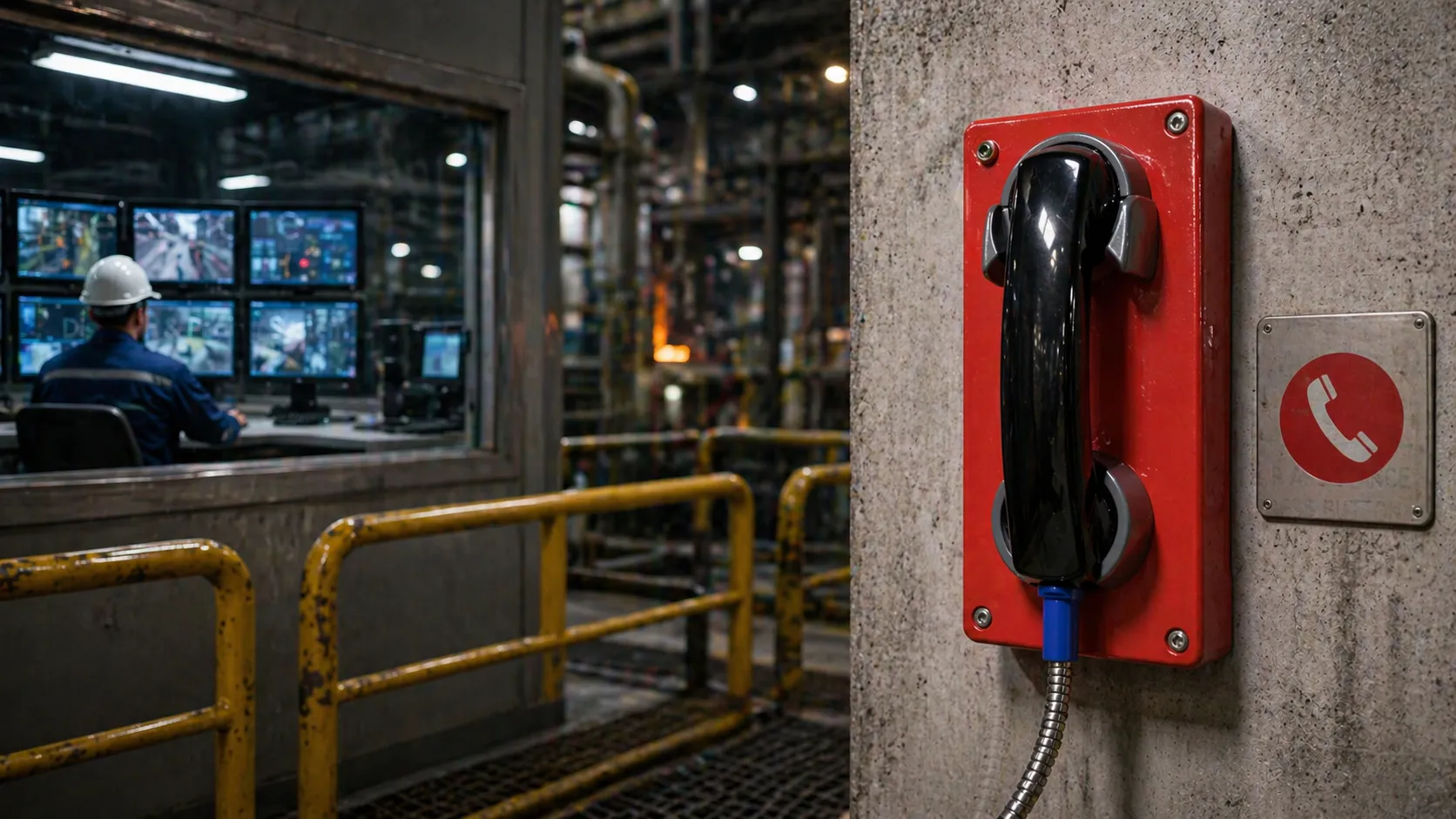
Key Features of a Vandal-Resistant Telephone
Strong Metal Housing and Tamper-Resistant Design
The housing is one of the most important parts of a vandal-resistant telephone. Stainless steel and heavy-duty aluminum are commonly used because they provide strong mechanical protection and good long-term durability. Some models use powder-coated steel or reinforced materials depending on indoor, outdoor, and budget requirements.
Tamper-resistant design may include hidden screws, anti-theft fasteners, reinforced mounting brackets, sealed openings, protected cable entry, and a secure front panel. For public and correctional environments, flush-mounted installation can also reduce exposed parts and improve resistance to attack.
Weatherproof and Dustproof Protection
For outdoor, tunnel, utility corridor, and industrial applications, weather protection is essential. Buyers should check the IP rating of the telephone enclosure. IP65, IP66, or similar ratings are often used to indicate protection against dust and water ingress, but the required level depends on the actual site conditions.
A good weatherproof design should protect not only the main enclosure but also the keypad, handset, speaker, microphone, cable entry, and internal circuit board. In coastal, chemical, or heavy industrial areas, corrosion resistance should also be considered.
Hands-Free, Handset, Hotline, or Emergency Call Operation
Vandal-resistant telephones can be designed with different operation methods. Some use a handset for private voice communication. Some use hands-free speakerphone operation for easier public emergency calling. Others use a single emergency button, automatic hotline dialing, or programmable speed-dial buttons.
The best choice depends on the application. A public help point may need a large one-button emergency call design. A tunnel maintenance phone may need a handset and clear voice quality. A prison phone may require controlled dialing and secure installation. An industrial dispatch phone may need loud audio, stable SIP registration, and integration with a control room platform.
SIP, Analog, GSM, or 4G Connectivity Options
Connectivity is another key selection factor. SIP vandal-resistant telephones are suitable for modern IP communication networks and can connect with IP PBX systems, SIP servers, dispatch platforms, and remote management systems. Analog telephones may be preferred in legacy telephone networks or simple point-to-point systems.
GSM or 4G versions can be useful where cabling is difficult or where the phone must be deployed quickly in remote locations. However, wireless models depend on signal quality, power supply, and carrier availability, so they should be evaluated carefully before installation.
How to Choose a Vandal-Resistant Telephone
Check the Installation Environment First
The first step is to understand where the telephone will be installed. Indoor public areas, outdoor parking lots, tunnels, industrial plants, coastal facilities, prisons, and hazardous areas all have different requirements. A model that works well in a station hall may not be suitable for a petrochemical site or roadside emergency point.
Important site factors include exposure to rain, dust, sunlight, vibration, salt mist, chemicals, temperature changes, acoustic noise, user behavior, network availability, power supply, and mounting surface. The more demanding the environment, the more important the enclosure, material, sealing, and system integration become.
Confirm the Protection Rating and Mechanical Strength
Buyers should check the enclosure protection rating, impact resistance, material thickness, mounting method, cable protection, and anti-tamper structure. For outdoor or industrial use, an IP-rated enclosure is usually necessary. For public safety or correctional facilities, anti-tamper construction and impact resistance may be more important.
It is also useful to review the handset cord design, keypad material, hook switch reliability, speaker protection, microphone sealing, and ease of replacement for vulnerable parts. A low-cost device may appear strong from the outside but fail early if small components are not designed for heavy use.
Choose the Right Communication Protocol
SIP/IP telephones are suitable for projects that use IP PBX, SIP servers, VoIP dispatch systems, or network-based emergency communication platforms. They can support flexible call routing, remote configuration, status monitoring, and integration with other IP systems. For new projects, SIP is often the preferred option because it fits modern network architecture.
Analog telephones are still used in some legacy systems, railway projects, industrial plants, and simple emergency lines. GSM or 4G telephones may be selected when cable deployment is difficult. The right protocol should be based on the existing communication infrastructure, future expansion plan, and maintenance capability of the site.
Consider Integration with Emergency and Security Systems
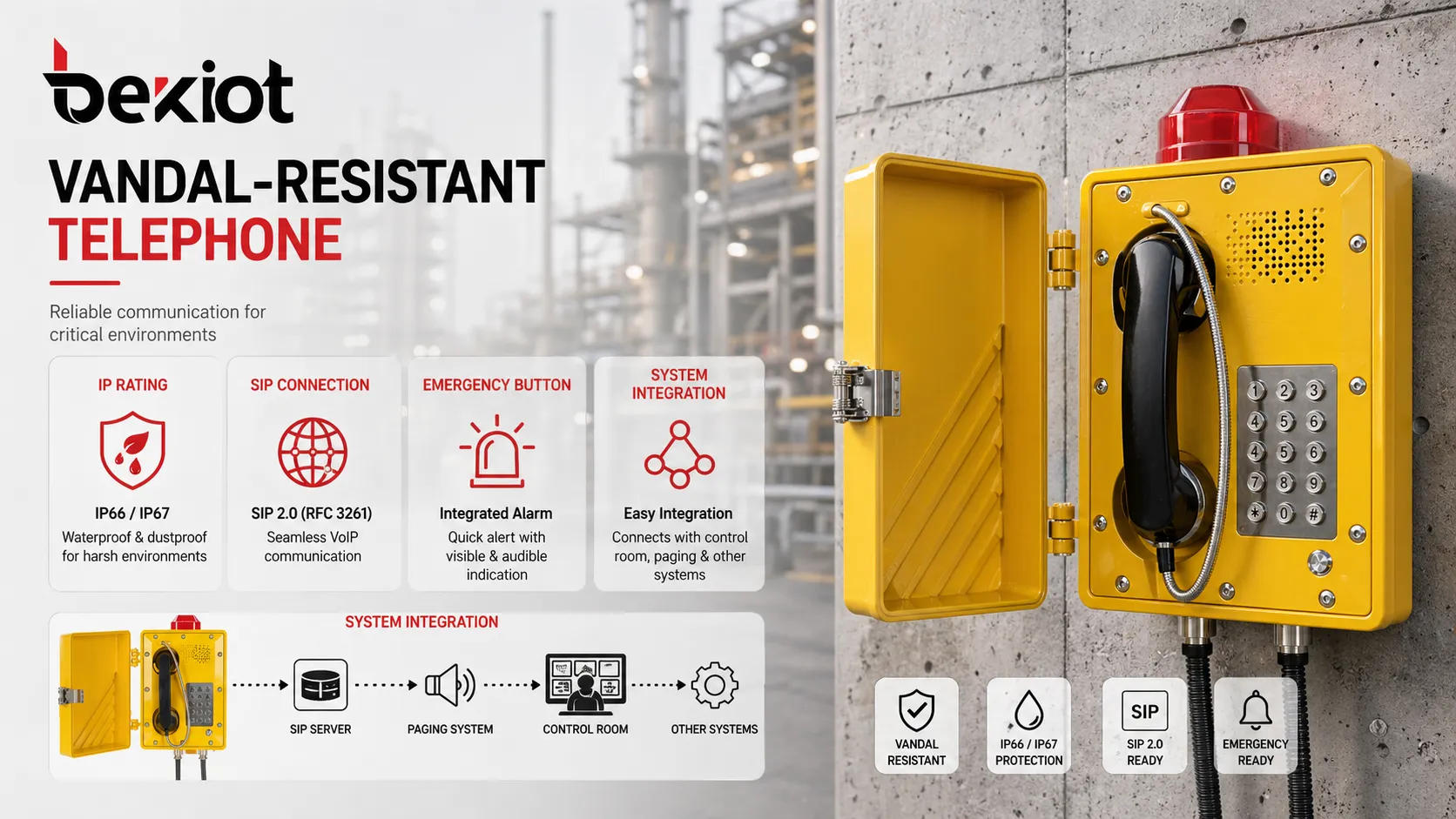
A vandal-resistant telephone can do more than make a voice call. In many projects, it can be integrated with IP PBX, dispatch console, CCTV linkage, paging system, public address system, access control, alarm platform, or central management software. When a call is made, the system may display the call location, open a nearby camera view, trigger an alarm, or notify operators.
This integration is especially valuable in tunnels, metro stations, campuses, industrial plants, and public safety facilities. It helps operators identify the event location quickly and coordinate a response through voice, video, paging, and alarm linkage.
Evaluate Maintenance, Spare Parts, and Supplier Support
Long-term reliability depends not only on product design but also on maintenance support. Buyers should check whether the supplier can provide spare handsets, cords, keypads, faceplates, circuit boards, mounting accessories, and technical documentation. For large projects, consistent model supply and after-sales support are important.
Remote management can also reduce maintenance cost. For SIP-based systems, features such as remote configuration, device status monitoring, auto-provisioning, firmware updates, and fault alerts can help maintenance teams manage many terminals across different sites.
Vandal-Resistant Telephone vs. Industrial Telephone
Similarities in Rugged Design
Vandal-resistant telephones and industrial telephones both focus on reliability in demanding environments. They may share similar features such as metal housing, sealed components, weatherproof protection, loud audio, wall-mounted installation, and compatibility with SIP or analog systems.
Both types are used when normal office phones cannot provide enough durability. They are often selected for emergency communication, dispatch communication, public access calling, and harsh environment operation.
Differences in Application Focus
The main difference is the application focus. A vandal-resistant telephone is usually optimized for public access, anti-tamper protection, and damage resistance. It is commonly used in public areas, prisons, transportation hubs, campuses, and outdoor help points.
An industrial telephone may focus more on environmental protection, noise resistance, operational communication, hazardous site requirements, and integration with plant communication systems. Some products can meet both needs, especially when the site requires strong mechanical protection and industrial-grade performance at the same time.
The best telephone is not always the strongest model on paper. It is the model that matches the site risk, user behavior, network architecture, emergency workflow, and maintenance plan.
How Becke Telcom Supports Rugged Communication Projects
Rugged Terminals for Public, Industrial, and Emergency Communication
Becke Telcom provides rugged communication terminals and integrated voice communication solutions for industrial, transportation, public safety, and emergency environments. Its product range can support vandal-resistant telephone applications, industrial telephones, SIP emergency phones, wall-mounted call terminals, paging phones, dispatch consoles, and related communication system integration.
For projects that require stronger environmental protection, Becke Telcom can help evaluate factors such as enclosure design, IP protection rating, installation method, SIP compatibility, dispatch linkage, paging integration, and emergency call workflow. This helps project owners build reliable communication points for tunnels, factories, campuses, stations, parking areas, utility corridors, and other demanding locations.
Integration with IP PBX, Dispatch, Paging, CCTV, and Alarm Systems
In many modern projects, a vandal-resistant telephone is not an isolated device. It works as part of a larger safety communication network. Becke Telcom solutions can be designed to connect rugged field terminals with IP PBX systems, SIP servers, dispatch platforms, CCTV linkage, paging speakers, alarm systems, and control room management platforms.
This integrated approach allows operators to receive emergency calls, identify call locations, communicate with field users, trigger paging announcements, and coordinate security or maintenance response from a central platform. For B2B projects, this system-level capability is often more valuable than choosing a single standalone device.
FAQ
What is a vandal-resistant telephone used for?
A vandal-resistant telephone is used for reliable voice communication in public, industrial, outdoor, and high-risk locations where ordinary phones may be damaged, tampered with, or exposed to harsh conditions. It is often used for emergency calls, security communication, dispatch contact, service assistance, and public help points.
Is a vandal-resistant telephone waterproof?
Some vandal-resistant telephones are waterproof or weatherproof, but the actual protection depends on the model and its IP rating. Outdoor and industrial applications should choose a telephone with suitable dustproof and waterproof protection, such as IP65, IP66, or another rating that matches the site conditions.
Can a vandal-resistant telephone connect to an IP PBX?
Yes. A SIP vandal-resistant telephone can connect to an IP PBX, SIP server, VoIP platform, or dispatch communication system. This allows the phone to support flexible call routing, remote configuration, extension dialing, emergency call routing, and integration with other IP-based systems.
What materials are used in vandal-resistant telephones?
Common materials include stainless steel, die-cast aluminum, cold-rolled steel, reinforced engineering plastics, armored metal cords, sealed rubber components, and corrosion-resistant coatings. The best material depends on whether the phone is used indoors, outdoors, in a public area, or in a harsh industrial environment.
How do I choose the right vandal-resistant telephone?
To choose the right vandal-resistant telephone, check the installation environment, vandalism risk, weather exposure, required IP rating, communication protocol, mounting method, emergency call function, audio requirement, system integration needs, and maintenance support. For larger projects, it is better to evaluate the telephone as part of the whole communication system rather than as a standalone product.







