Push to Talk radio systems are built for organizations that need fast, direct, and reliable voice communication in the real world. Instead of dialing a number, waiting for a connection, and holding a conventional conversation, users simply press a dedicated key to speak and release it to listen. This communication model is simple, immediate, and highly effective for field coordination, dispatch operations, patrol activity, maintenance response, transport control, and emergency support.
For many industries, Push to Talk is not just a convenient feature. It is a working method. Teams in motion often do not have the time or conditions to manage traditional call flows. They need a communication tool that is quick to access, easy to understand, and consistent under pressure. That is why Push to Talk remains widely used across security, industrial operations, logistics, utilities, campuses, energy sites, and command environments.
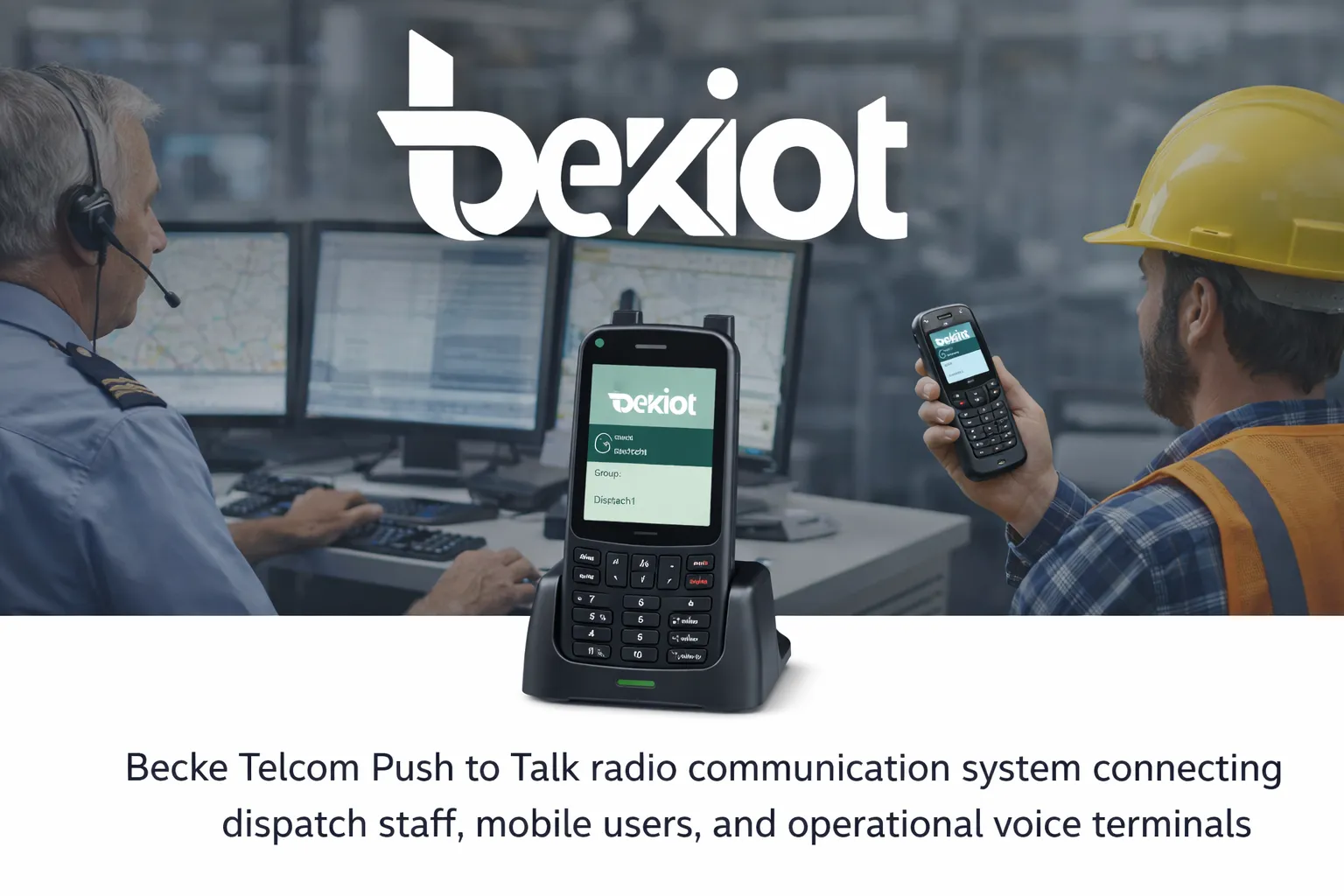
At Becke Telcom, we view Push to Talk radio systems as part of a broader operational communication architecture. In modern projects, PTT is no longer limited to standalone handheld radios. It increasingly works alongside dispatch platforms, telephony systems, intercom devices, gateways, and IP-based communication tools to create a more connected environment for field teams and control centers.
What Is a Push to Talk Radio System?
A Push to Talk radio system is a voice communication system that allows users to transmit speech by pressing a button. In most deployments, the communication is half-duplex, which means one user speaks at a time while others listen. Although the concept is simple, it is extremely effective for operational communication because it keeps messages short, direct, and action-oriented.
Traditional Push to Talk is often associated with two-way radios, but the modern system landscape is much broader. Today, Push to Talk can appear on handheld radios, rugged smart devices, vehicle terminals, dispatch consoles, IP phones, and broadband communication platforms. The real value of PTT is not tied to only one device type. It lies in the ability to deliver immediate voice coordination with minimal operating steps.
In practical deployments, a Push to Talk radio system may include user terminals, communication channels, talk groups, dispatch logic, recording, emergency call handling, monitoring, and interoperability components. This means PTT is no longer just a radio function. It is often part of a larger communication workflow designed for real operational use.
Why Push to Talk Still Matters
Many organizations already use telephony, messaging applications, and mobile data tools. Even so, Push to Talk continues to hold an important role because it solves a different problem. It is designed for fast coordination rather than detailed conversation. It allows a supervisor to speak to multiple users immediately, lets field staff report status in seconds, and supports team awareness without the overhead of conventional call setup.
This matters in real environments where time, mobility, and clarity are critical. A technician inspecting equipment, a guard responding to an incident, a dispatcher coordinating teams, or a field worker moving through a large site all benefit from a communication method that removes extra steps and keeps operational exchange focused.
Key Features of Push to Talk Radio Systems
Instant Voice Communication
The first and most recognizable feature of a Push to Talk radio system is immediacy. Users do not need to navigate contact lists or wait for a normal call to connect. They press once and speak. This is especially valuable when the message is urgent, brief, and intended to trigger action.
In industries where a few seconds can affect safety, workflow continuity, or response quality, this speed becomes a practical advantage rather than a minor convenience.
Group Communication and Team Coordination
Push to Talk is naturally suited to one-to-many and many-to-many communication. A user can speak to an entire workgroup, patrol unit, shift team, or operational department through a shared channel or talk group. This is far more efficient than repeating the same instruction through separate phone calls.
Group-based communication helps align personnel quickly. It improves situational awareness, reduces fragmentation, and allows teams to act from the same voice instruction at the same time.
Simple Operation in Real Working Conditions
One reason Push to Talk remains popular is that it is easy to use. The interaction is direct: press, speak, release, listen. This low training burden is valuable in environments with rotating staff, contractors, drivers, guards, maintenance crews, and mobile field teams.
In demanding environments, simple communication tools often perform better because they reduce hesitation and user error. A system that is easy to operate under pressure can improve both response speed and communication confidence.
Emergency and Priority Functions
Professional Push to Talk environments may support emergency calling, priority control, alert escalation, and dispatch-level management. These features help the platform move beyond convenience and into the category of operational safety support.
Priority logic is especially important where many users share the same communication environment. Supervisors, dispatchers, and emergency personnel may need stronger transmission priority so urgent information is not delayed by routine traffic.
Integration with Wider Communication Systems
Modern Push to Talk radio systems can work together with IP PBX platforms, SIP intercoms, paging systems, gateways, command software, and recording platforms. This means field users may communicate not only with other handheld users, but also with control room operators, desk-based users, or other connected communication endpoints.
For organizations moving toward more integrated communication environments, this is one of the most important strengths of modern PTT. It allows radio-style communication to become part of a broader operational network rather than remain isolated.
Main Benefits of Push to Talk Radio Systems
Faster Response
The most direct benefit of Push to Talk is speed. It shortens the time between noticing an issue and informing the people who need to respond. That speed helps teams manage faults, route changes, service requests, patrol updates, and emerging incidents more effectively.
In many operational settings, communication delay quickly turns into operational delay. Push to Talk reduces that gap and helps organizations act with greater confidence.
Better Shared Awareness
Because multiple users can hear the same message at the same time, Push to Talk supports stronger shared awareness across a team. This reduces repeated calls, cuts down on fragmented information, and helps different roles stay aligned around the same situation.
For organizations with dispatch-led workflows or distributed field staff, that shared awareness can improve efficiency and reduce mistakes caused by partial information.
Practical Support for Field Safety
When workers operate across large facilities, outdoor environments, or active public areas, communication must remain accessible under pressure. Push to Talk works well because it does not ask users to stop, unlock a device, search for a contact, and start a standard call. The path to communication is much shorter.
That simplicity can support faster escalation and quicker reporting when abnormal conditions occur. In many industries, this makes Push to Talk an important communication layer for daily safety and emergency readiness.
Scalability from Small Teams to Large Operations
Push to Talk can work for a single local team or for a much broader multi-site organization. A small facility may use it for maintenance and security coordination, while a larger enterprise may deploy it across control rooms, stations, campuses, transport routes, or field service zones.
As communication requirements grow, the system can expand through additional devices, group structures, wider network integration, and stronger dispatch control.
Industry Applications of Push to Talk Radio Systems
Security and Patrol Operations
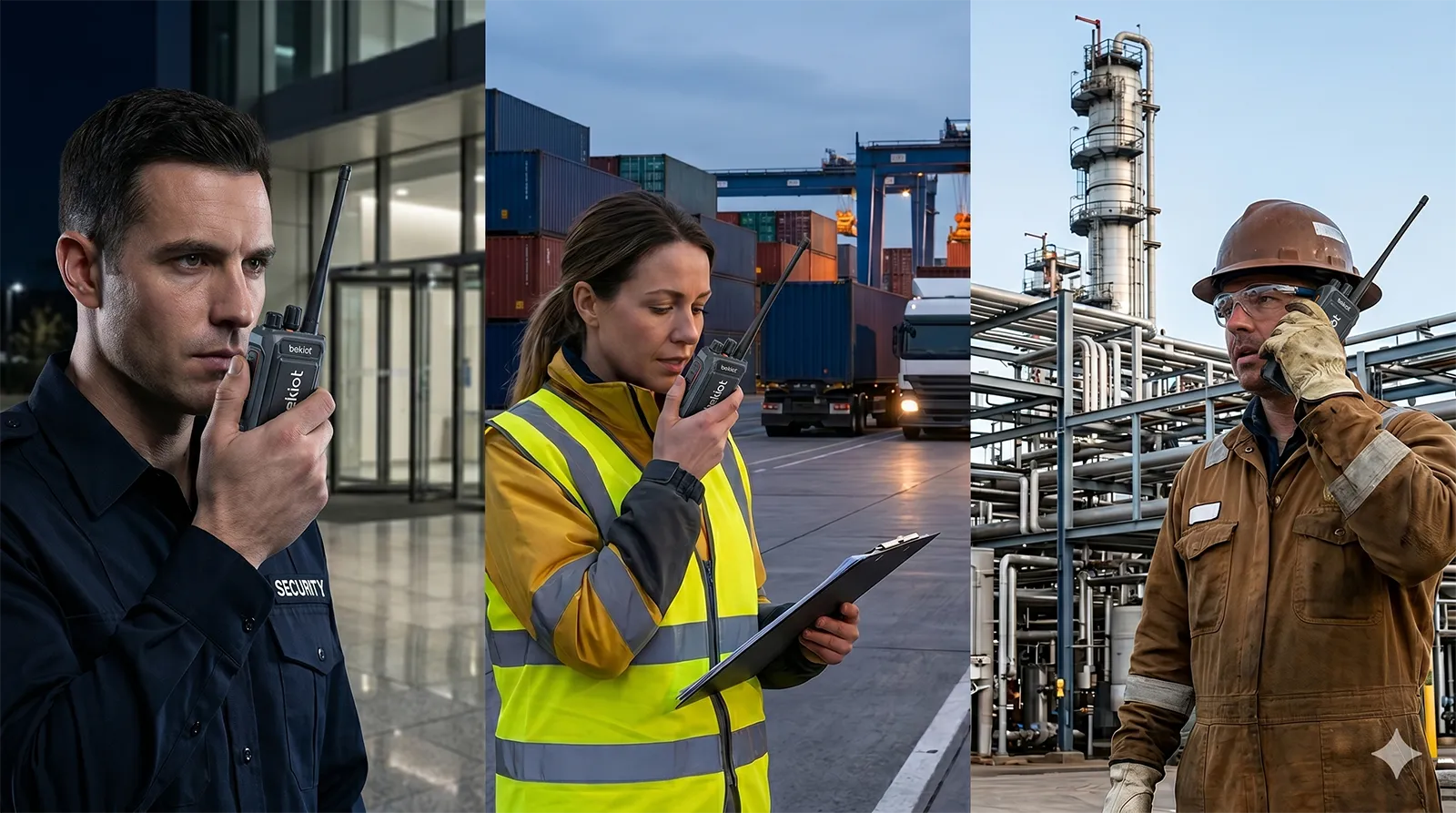
Security teams often depend on rapid voice coordination. Guards, patrol personnel, supervisors, and control rooms need to report incidents, request support, share location updates, and coordinate response in real time. Push to Talk fits these workflows naturally because it is built for fast, action-oriented communication.
Transportation and Logistics
Transport operations require constant coordination between dispatchers, drivers, station staff, loading teams, and maintenance personnel. Push to Talk helps these roles exchange short operational updates without the delay of traditional telephony.
In logistics and route-based operations, that can improve timing, support issue escalation, and keep distributed personnel more closely connected to central control.
Industrial and Utility Environments
Factories, plants, warehouses, utility sites, and maintenance operations often spread personnel across large areas. Teams need a direct way to report problems, request support, and coordinate work between field workers and supervisors. Push to Talk delivers that functionality in a form that is practical for active industrial use.
This becomes even more valuable when PTT is connected to broader site communication infrastructure rather than limited to device-to-device communication alone.
Energy and Remote Sites
Wind farms, power facilities, remote infrastructure, and large outdoor sites benefit from communication methods that stay simple and dependable. Personnel may be far from one another, work across exposed terrain, or move between fixed and mobile tasks. Push to Talk helps maintain direct voice contact between field workers, supervisors, and operational control points.
Emergency and Command Support
During abnormal events, teams need quick communication that supports coordination rather than delay. Push to Talk remains highly effective for incident updates, short command instructions, team grouping, and rapid field response. In a modern environment, its value increases further when linked to dispatch tools, telephony resources, GIS visibility, and broader command workflows.
Push to Talk Radio Systems and Interoperability
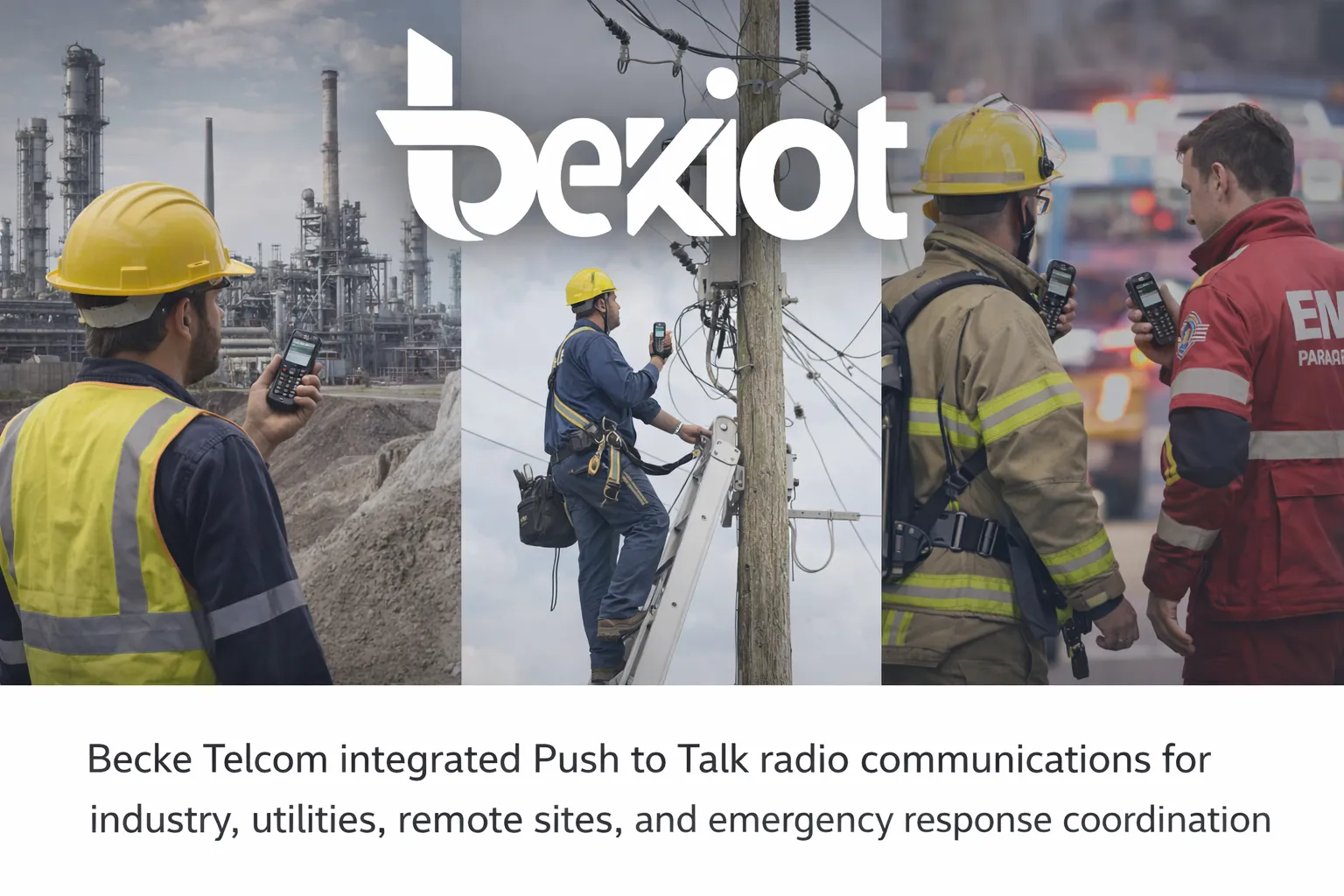
In many real projects, communication is not limited to one radio standard or one network type. Different departments may use analog radios, digital radios, public network push-to-talk services, telephony systems, or IP-based communication tools. Without interoperability, these users can end up separated by technology even when they are working on the same operational task.
That is why interoperability has become increasingly important in modern Push to Talk system design. A stronger communication environment allows multiple communication paths to work together more effectively. This reduces isolation between teams and makes it easier to maintain coordination across mixed operational conditions.
At Becke Telcom, we place strong emphasis on connected communication architecture. We believe Push to Talk delivers more long-term value when it works as part of a larger operational system that supports dispatch, telephony, intercom, and cross-platform collaboration.
Push to Talk vs Traditional Calling
Traditional phone calls are useful for private conversations and detailed discussions, but they are not always ideal for fast field coordination. Standard calling depends on dialing, ringing, answering, and maintaining a two-party conversation. Push to Talk works differently. It is built for short, direct, task-focused messages.
That difference is not only technical. It is also behavioral. Phone systems support conversation. Push to Talk supports operational action. For many organizations, both tools remain useful, but they serve different communication purposes.
How Becke Telcom Supports Modern Push to Talk Projects
Becke Telcom focuses on communication solutions for operational environments where speed, coordination, and integration matter. Our approach to Push to Talk is not limited to supplying endpoints. We support broader communication design that can connect field users with dispatch workflows, intercom devices, telephony resources, and integrated communication platforms.
For customers in security, transportation, industry, utilities, energy, and emergency-related environments, this means a more practical path from isolated voice devices to a more unified communication environment. Instead of treating PTT as a standalone tool, Becke Telcom helps position it as part of a wider coordination framework that supports daily work as well as higher-pressure response scenarios.
Conclusion
Push to Talk radio systems remain one of the most effective voice communication methods for organizations that depend on speed, simplicity, and team coordination. Their strength lies in immediate access, efficient group communication, practical field use, and the ability to support action-oriented workflows where conventional calling may be too slow or too fragmented.
As communication requirements continue to evolve, Push to Talk is becoming more valuable when it is integrated rather than isolated. Organizations increasingly need systems that connect field users, dispatch roles, and broader communication resources in one operational environment. That is where a well-designed Push to Talk strategy creates stronger long-term value.
Talk to Becke Telcom
Looking for a more capable Push to Talk communication solution for your project? Becke Telcom helps organizations build integrated communication environments for security, transportation, industrial operations, utilities, energy sites, and emergency-related applications.
Whether you need faster field communication, stronger dispatch coordination, or better interoperability across communication systems, Becke Telcom can help you design a solution that fits real operational requirements.
Contact Becke Telcom to explore Push to Talk radio solutions built for professional communication, field coordination, and connected operational workflows.
FAQ
What is a Push to Talk radio system?
A Push to Talk radio system is a voice communication system that lets users press a dedicated button to speak and release it to listen. It is widely used in team-based environments that need fast operational communication.
What are the main benefits of Push to Talk?
The main benefits include faster communication, better team awareness, simpler field use, improved support for safety-related communication, and more efficient coordination across active operations.
Is Push to Talk only for handheld radios?
No. Modern Push to Talk can be used on handheld radios, rugged devices, vehicle terminals, dispatch consoles, IP phones, and integrated communication platforms.
Why is Push to Talk still important today?
Push to Talk remains important because it provides immediate, action-oriented voice communication that works well in mobile, field-based, and time-sensitive operational environments.
Can Push to Talk work with other communication systems?
Yes. Modern Push to Talk systems can work with telephony platforms, intercom systems, gateways, paging systems, and broader integrated communication environments depending on the project design.