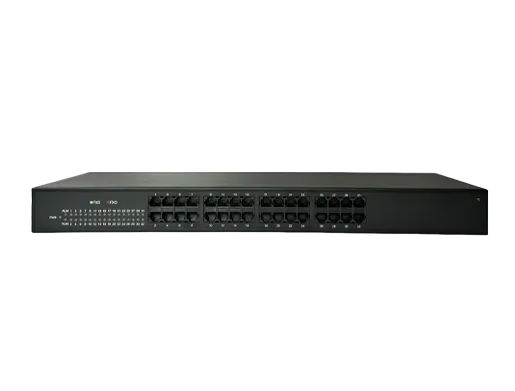
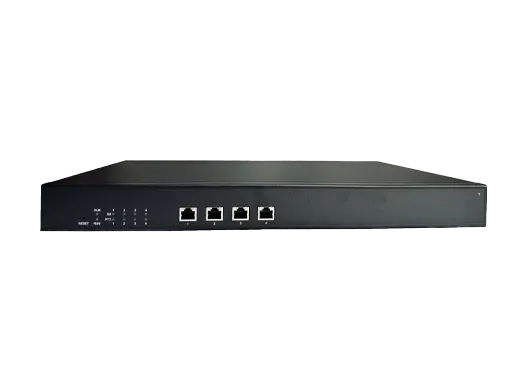
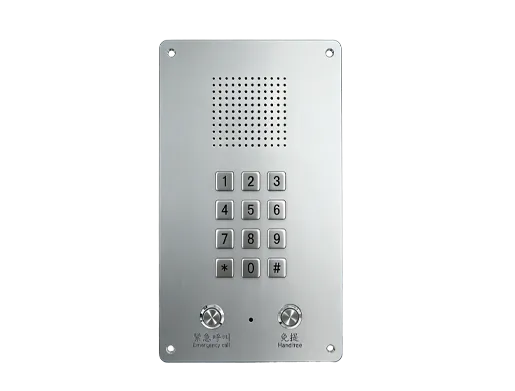
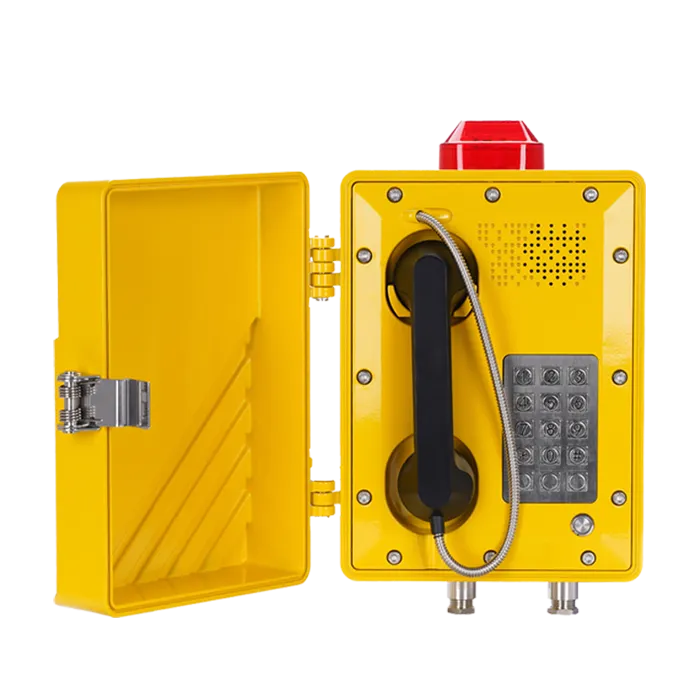
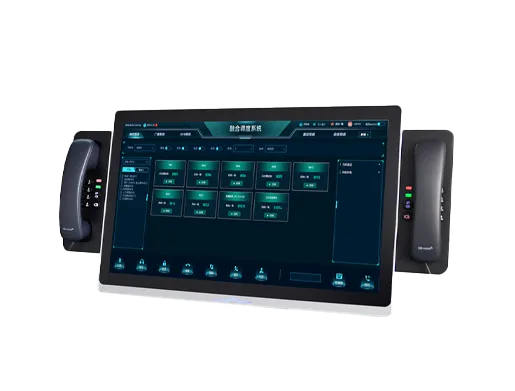
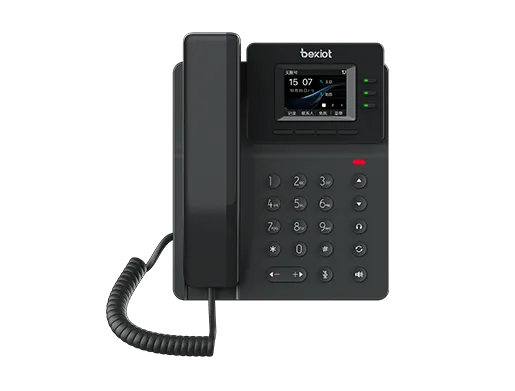
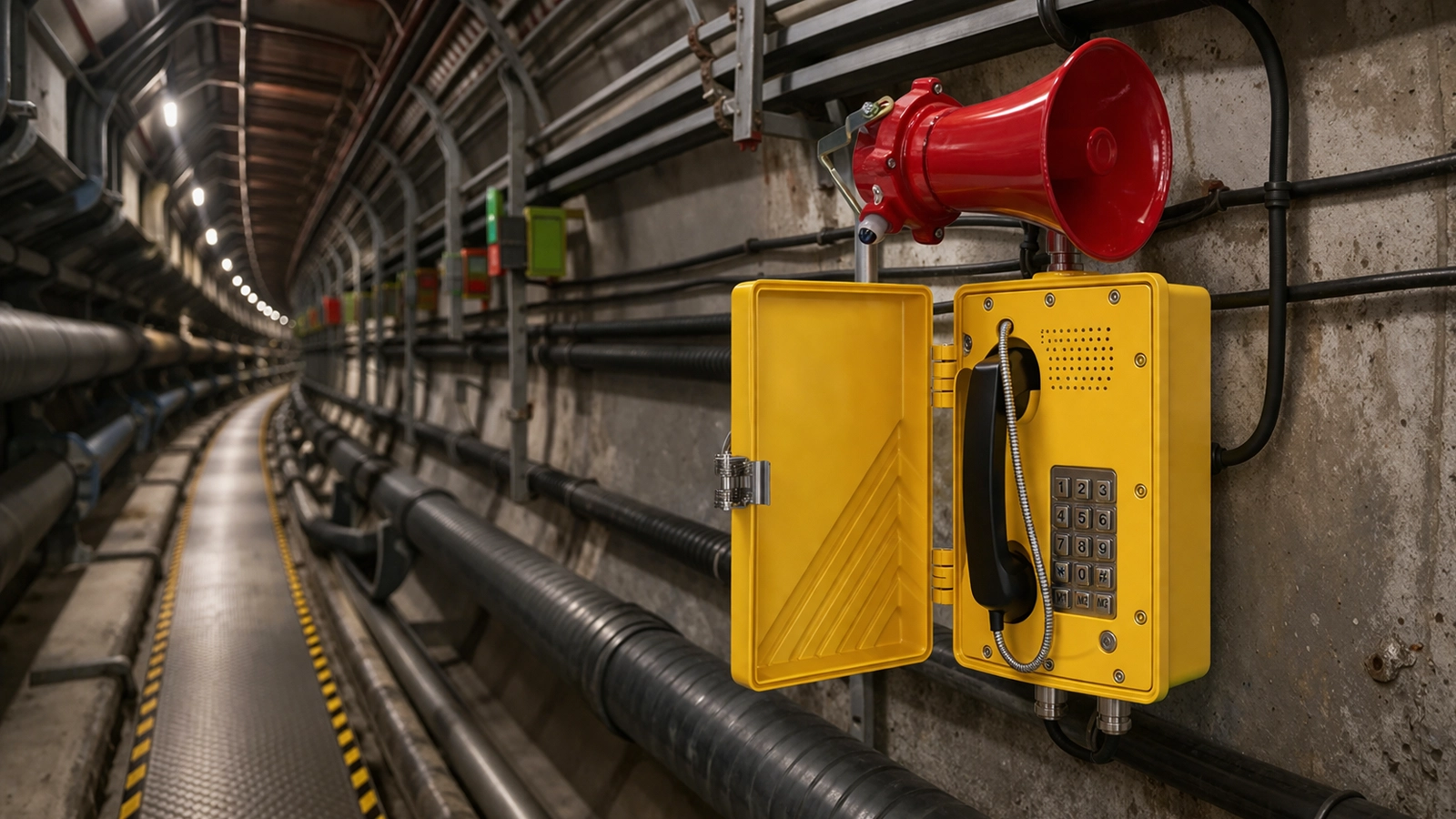
A public address system, often called a PA system, is an audio communication system designed to deliver voice announcements, alerts, paging messages, live speech, or pre-recorded audio to a defined area or group of areas. In practical use, a PA system helps one source of audio reach many listeners at the same time. It is widely used in schools, factories, office buildings, transportation hubs, hospitals, shopping centers, stadiums, industrial sites, and public safety environments where clear and controlled mass audio communication is required.
At a basic level, a PA system takes audio from one or more sources, processes and amplifies it, and then distributes it to speakers installed across a site. The concept sounds simple, but in real deployments the system can range from a small local announcement setup to a large, multi-zone communication platform connected with paging consoles, SIP networks, intercom systems, emergency broadcast logic, and centralized management software. In modern environments, public address systems are no longer limited to analog loudspeakers and manual microphones. They increasingly operate as part of broader IP-based communication architecture.
The value of a PA system lies in its ability to reach people quickly and clearly. In daily operations, it may be used for routine announcements, background paging, shift instructions, queue management, bell schedules, or service notices. In emergency situations, it becomes even more important because it can help guide evacuation, issue warnings, coordinate response, and support situational control. For this reason, public address systems are often treated not only as convenience tools, but also as important operational and safety infrastructure.
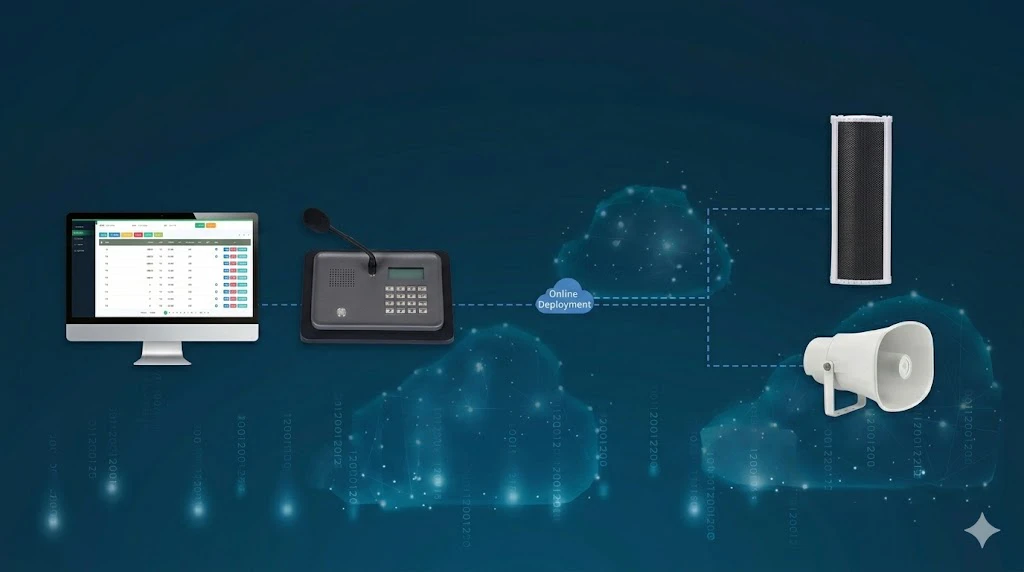
A public address system distributes live or recorded audio across one or more zones for routine communication and emergency announcements.
Definition of a Public Address System
A System for One-to-Many Audio Communication
The main purpose of a public address system is to broadcast sound from a single source or a limited set of sources to many listeners at once. Unlike a normal telephone call or intercom conversation, which is usually intended for one person or a small group of participants, a PA system is designed for one-to-many communication. This makes it suitable for environments where information needs to reach an audience, a work area, a building, or an entire site in a direct and intelligible form.
In practical environments, the message may be a live spoken announcement from a microphone, a scheduled chime, a background music stream, a prerecorded safety instruction, or an automatically triggered emergency alert. The listeners may be employees in a factory, passengers in a station, students in a school, visitors in a hospital, or people in an outdoor public area. What unites these use cases is the requirement for sound to be distributed efficiently, clearly, and often selectively according to area or priority.
This is why the term public address system covers more than just loudspeakers. It refers to an organized audio distribution platform that includes sound input, amplification, signal routing, speaker output, and often zone management. In advanced systems, it may also include network interfaces, monitoring, emergency logic, and integration with other communication systems.
From Simple Paging to Site-Wide Communication Infrastructure
Some people think of a PA system as nothing more than a microphone connected to a few ceiling speakers. That remains true in some small sites, but the term now covers much more sophisticated solutions. In a large school or factory, the PA system may support dozens of zones, multiple paging stations, scheduled announcements, priority override, integration with SIP phones, and centralized web-based control. In transportation or industrial safety environments, it may also connect to alarms, control rooms, and emergency communication workflows.
Because of this evolution, modern PA systems are often positioned between audio infrastructure and operational communication infrastructure. They still perform the traditional role of broadcasting sound, but they also contribute to workflow management, safety communication, and site coordination. In many cases, the system has to deliver not only sufficient audio volume, but also correct message routing, reliable trigger behavior, and intelligible voice performance under difficult conditions.
This broader perspective helps explain why PA systems are relevant across both commercial and industrial sectors. The system is no longer only about being heard. It is also about being heard clearly, in the right place, at the right time, with the right control logic behind it.
A public address system is not just a group of speakers. It is a controlled platform for distributing voice and audio where timing, coverage, and intelligibility matter.
How a Public Address System Works
Audio Input, Processing, Amplification, and Output
A PA system works by taking audio from a source, preparing that audio for transmission, increasing it to a usable power level, and then sending it to speakers located across the required coverage area. The audio source may be a handheld microphone, desktop paging microphone, emergency microphone, media player, network stream, telephone interface, SIP endpoint, or prerecorded message source. Once captured, the signal is usually routed through control equipment that manages level adjustment, source selection, tone shaping, and zone assignment.
After that, the signal passes to an amplifier or a set of amplifiers. The amplifier raises the low-level audio signal so it can drive speakers effectively across short or long cable runs. The amplified sound is then delivered to ceiling speakers, wall speakers, horn speakers, column speakers, or outdoor weatherproof speaker units depending on the application. In some systems, distributed audio over IP replaces part of the traditional analog distribution method, allowing network-connected amplifiers or speakers to receive the message more flexibly.
The final result is that one audio source can be heard across one or more locations. The system may address all speakers at once or only selected zones. That selection depends on how the PA platform is designed and what operational controls are in place.
Zone Control and Selective Broadcasting
One of the most important functions of a practical PA system is zoning. A zone is a defined coverage area, such as a floor, building wing, production line, station platform, warehouse section, classroom block, parking area, or outdoor perimeter. Instead of sending every announcement to every speaker, the system can target the message to only the relevant area. This improves operational efficiency and reduces unnecessary noise.
For example, a school may broadcast a bell tone to the whole campus but send a staff paging announcement only to the administration area. A factory may page maintenance staff in one workshop without disturbing the rest of the site. A hospital may separate waiting area announcements from internal staff communication. In transport environments, different platforms or terminals may require different messages at the same time. Zoning makes all of this possible.
Modern systems often support zone grouping, priority layering, and selective source routing. This means certain inputs can reach certain zones only, while emergency messages may override normal audio everywhere or in designated safety areas. In this way, the PA system becomes a structured communication platform rather than a simple broadcast chain.
Priority Logic and Emergency Override
Many PA systems must handle more than one type of audio source, and not all messages have equal importance. This is where priority logic becomes essential. Routine background music, for example, should yield immediately to a live page. A normal announcement should yield to an emergency evacuation instruction. A site-wide alarm tone may need to override all other content automatically. The system therefore includes logic that determines which source has the right to take control when multiple inputs compete.
In emergency-capable systems, this priority behavior is especially important. The platform may be linked with fire alarm panels, control room consoles, or emergency broadcast triggers. When a critical event occurs, the system can automatically mute lower-priority audio and deliver warning tones or pre-recorded instructions to defined zones. In some installations, live emergency paging can then follow with the highest priority level.
This controlled override behavior is one of the reasons PA systems are widely used in safety-sensitive environments. The value of the system is not only that it can produce sound, but that it can deliver the right sound with the correct urgency and routing when conditions change quickly.
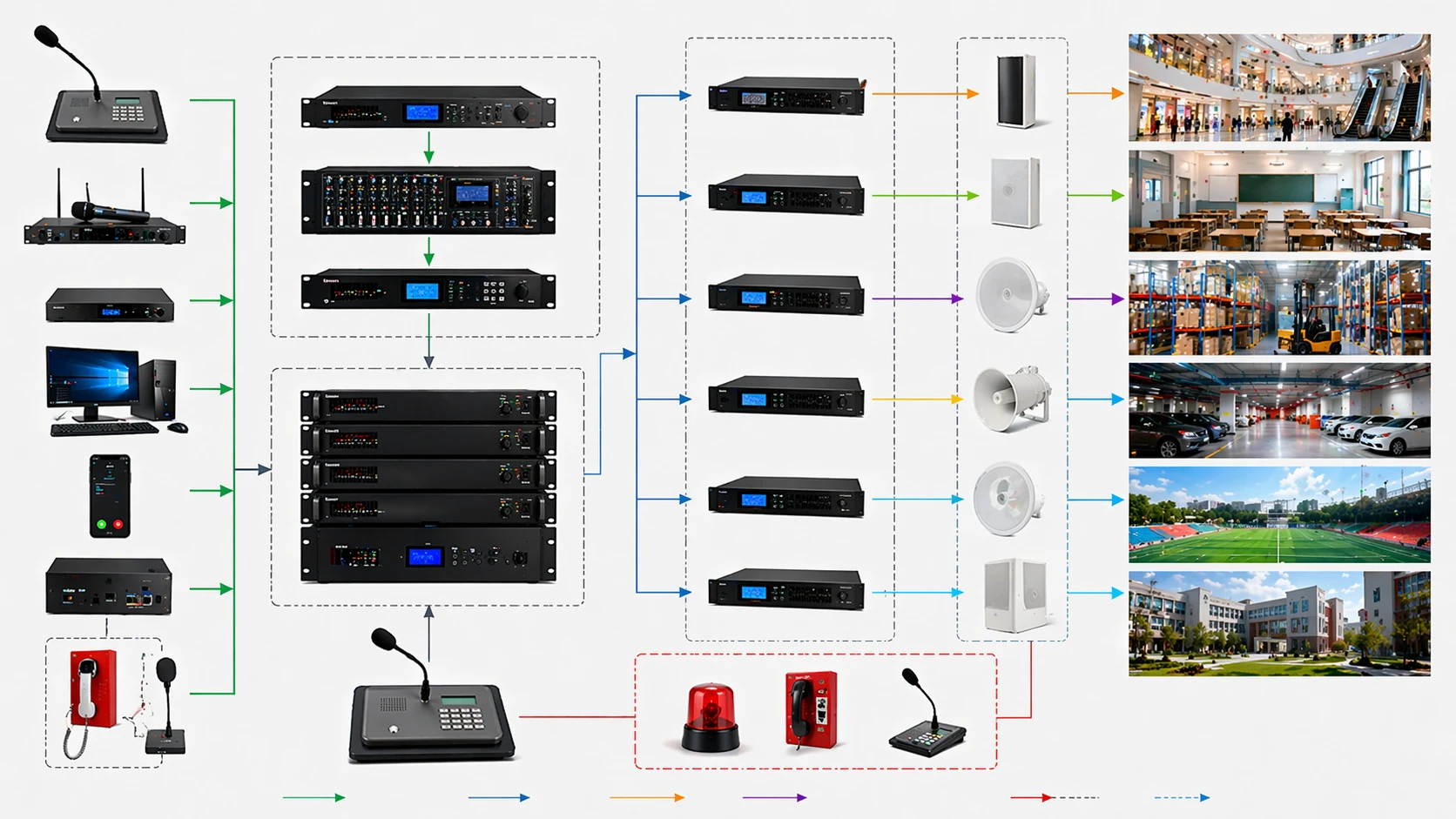
A typical PA system workflow includes audio input, control and zoning, amplification, and speaker distribution.
Main Components of a Public Address System
Microphones, Paging Consoles, and Audio Sources
The input side of a PA system begins with devices that generate or introduce audio. These may include handheld microphones, gooseneck paging microphones, dispatcher consoles, audio players, media servers, network streams, or integrated SIP paging endpoints. In traditional installations, a simple paging microphone may be enough. In larger systems, the microphone may include zone keys, status indicators, call control, and multiple programmable functions.
Some environments also use scheduled or automated audio inputs. Schools may use clock-driven bell tones, industrial plants may use shift change alerts, hospitals may use service announcements, and emergency systems may rely on pre-recorded instructions for consistent message delivery. In modern IP environments, audio input can also come from telephony systems, software platforms, and remote control interfaces rather than only from locally connected analog devices.
This means the “source” in a PA system is no longer limited to a person speaking into a microphone. It can be any authorized live or automated origin point capable of sending audio into the system.
Amplifiers, Controllers, and Signal Management
Amplifiers are a core component because they provide the power needed to drive loudspeakers across the intended coverage area. Depending on system size, there may be one amplifier for a small installation or many amplifiers distributed by zone, building, or function. In modern designs, amplifiers may support analog inputs, networked audio interfaces, monitoring features, and remote management. Their role is not merely to make audio louder, but to maintain stable and usable output across the speaker network.
Controllers manage the logic of the system. They may handle source selection, priority rules, zone routing, audio scheduling, fault reporting, and integration with other systems. In smaller setups, some of this logic may be built directly into a mixer-amplifier or paging station. In larger architectures, dedicated controllers or software servers coordinate the system as a whole.
Signal management is critical because a PA system must preserve intelligibility, avoid distortion, and keep audio delivery predictable. In professional environments, the system is judged not just by volume, but by whether listeners can understand the message clearly in the real acoustic environment.
Speakers and Coverage Devices
The speaker layer determines how and where the sound is heard. Different speaker types are selected according to the environment. Ceiling speakers are common in offices, schools, hospitals, and commercial buildings. Wall-mounted speakers are used where directional coverage is needed. Horn speakers are often chosen for factories, outdoor areas, and high-noise environments because they project sound more forcefully. Column speakers may be used in corridors, halls, and reverberant spaces where voice clarity is especially important.
Outdoor and industrial applications may require weatherproof housings, corrosion resistance, stronger sound pressure output, or high-visibility installation formats. In transportation hubs or large industrial sites, speaker placement becomes part of the overall communication design because coverage gaps or excessive overlap can reduce message clarity.
As a result, speaker selection is not only an acoustic decision. It is also a practical engineering decision shaped by environment, mounting conditions, noise levels, protection requirements, and message purpose.
Key Features of a Public Address System
Wide Area Audio Distribution
The most basic feature of a PA system is its ability to distribute sound over a large area. This may be a single room, a floor, a campus, a factory, a tunnel, or an outdoor facility. The system is designed so that one message can reach many people without the speaker needing to move physically from location to location. This improves speed, consistency, and operational reach.
In day-to-day use, wide area distribution supports routine announcements and workflow coordination. In emergency use, it supports immediate site-wide or zone-specific warning delivery. This ability to cover space efficiently is what distinguishes public address from normal person-to-person communication tools.
The scale of distribution depends on design. Some systems are modest and localized, while others are built to support large, multi-building, or geographically distributed environments with centralized control.
Zone Paging and Area-Based Control
Zone paging is one of the most useful and widely required PA features. It allows operators to choose who hears a message instead of broadcasting everything to everyone. This reduces disruption, improves relevance, and makes the system more practical in large or mixed-use facilities. In many environments, zoning is the difference between a crude broadcast tool and a truly useful communication system.
Area-based control also allows the system to mirror how the site actually operates. A warehouse, for example, may have separate receiving, storage, dispatch, and office areas. A school may have classroom zones, outdoor zones, and administrative zones. A hospital may need public areas, restricted areas, and staff-only paging areas. A well-designed PA system reflects those operational boundaries in its logic.
This is why zoning is not just a technical feature. It is a workflow feature that makes the system more efficient and more acceptable to users.
Integration with SIP, IP Networks, and Other Systems
Modern public address systems increasingly integrate with SIP telephony, IP networks, intercom platforms, alarm inputs, and management software. A SIP-enabled PA system may allow users to page from an IP phone, a dispatch console, or a network microphone. An IP PA platform may connect multiple buildings or outdoor sites over standard network infrastructure. Integration with alarms and control systems can support automated emergency announcements.
This networked model expands what the PA system can do. It can become part of a unified communication environment instead of operating as an isolated analog subsystem. Administrators may configure zones through a web interface, monitor device status remotely, schedule announcements centrally, or link voice broadcast functions with incident response workflows.
In this sense, the PA system is evolving from a standalone announcement tool into a broader communication service that supports modern site operations.
Emergency Broadcast Capability
In many sectors, one of the most important features of a PA system is emergency broadcasting. During a fire, security incident, severe weather event, industrial alarm, or evacuation scenario, the system can deliver warning tones and voice instructions quickly to the people who need them. This makes it an important part of life-safety communication in many environments.
The effectiveness of emergency broadcasting depends on more than high volume. The system must be intelligible, properly zoned, prioritized correctly, and reliable under stress. In some cases, it also needs backup power, monitored circuits, or integration with emergency control platforms. Where safety is involved, the PA system may need to meet additional design and regulatory requirements.
For many organizations, this emergency role is one of the strongest reasons to invest in a professionally designed PA system rather than relying on ad hoc loudspeaker arrangements.
The real strength of a PA system is not simply that it can make announcements, but that it can deliver the right message to the right area at the moment it matters most.
Applications of Public Address Systems
Schools, Campuses, and Educational Facilities
Schools are one of the most common PA system environments. A school PA system may handle morning announcements, class change bells, emergency instructions, zone paging, and general communication between the office and staff areas. In modern campus environments, the system may also integrate with SIP phones, network speakers, intercom stations, and digital scheduling tools.
Educational sites benefit from zoning because different parts of the campus often need different audio behavior. A whole-school bell schedule is different from a targeted page to the office, and both are different from an emergency lockdown or evacuation announcement. The PA system helps manage these varying needs from one coordinated platform.
For this reason, the system supports not only convenience but also campus safety and daily administrative efficiency.
Factories, Warehouses, and Industrial Sites
Industrial environments use PA systems for shift notifications, operational instructions, emergency alerts, safety messages, and plant-wide communication. In noisy environments, the system may rely on horn speakers, high-output amplifiers, and carefully planned coverage to ensure the message remains audible and understandable. In larger sites, zoning allows messages to reach only relevant workshops, production lines, or outdoor process areas.
In some industrial facilities, the PA function may be part of a larger PAGA or industrial communication platform that combines paging, alarms, telephony, and emergency coordination. This is especially important where site conditions are harsh and communication must remain dependable during incidents. Weatherproof speakers, redundant power arrangements, and network integration may all be relevant in such environments.
Here, the PA system serves not just operational convenience but also worker awareness, hazard communication, and coordinated response.
Hospitals, Commercial Buildings, and Service Facilities
Hospitals, clinics, hotels, office buildings, and shopping facilities often use PA systems for controlled public messaging and internal service communication. In hospitals, for example, announcements may be used in waiting areas, support workflows, or emergency communication. In hotels and commercial sites, the system may support visitor guidance, scheduled messages, and public notifications without requiring staff to communicate manually across large areas.
These environments usually require a balance between audibility and comfort. The sound must be clear enough to be useful but not so aggressive that it becomes disruptive. Zoning, volume control, scheduled content, and better speaker selection help achieve that balance.
Because these sites often serve the public directly, the quality of the announcement experience affects both operational efficiency and user perception.
Transportation, Public Safety, and Outdoor Environments
Transport terminals, rail platforms, airports, parking facilities, tunnels, public squares, and outdoor service points are major application areas for PA systems. In these environments, announcements may provide passenger information, operational direction, safety warnings, or emergency instructions. Coverage requirements are often more demanding because of background noise, open space, weather exposure, and large listener movement patterns.
Outdoor and public safety deployments therefore tend to require stronger system design. They may use weatherproof speakers, IP-connected amplifiers, centralized control, and integration with security or emergency systems. Message clarity is especially important because listeners may be stressed, distracted, or unfamiliar with the environment.
In such applications, the public address system becomes part of the site’s communication backbone and often contributes directly to safety performance and emergency readiness.
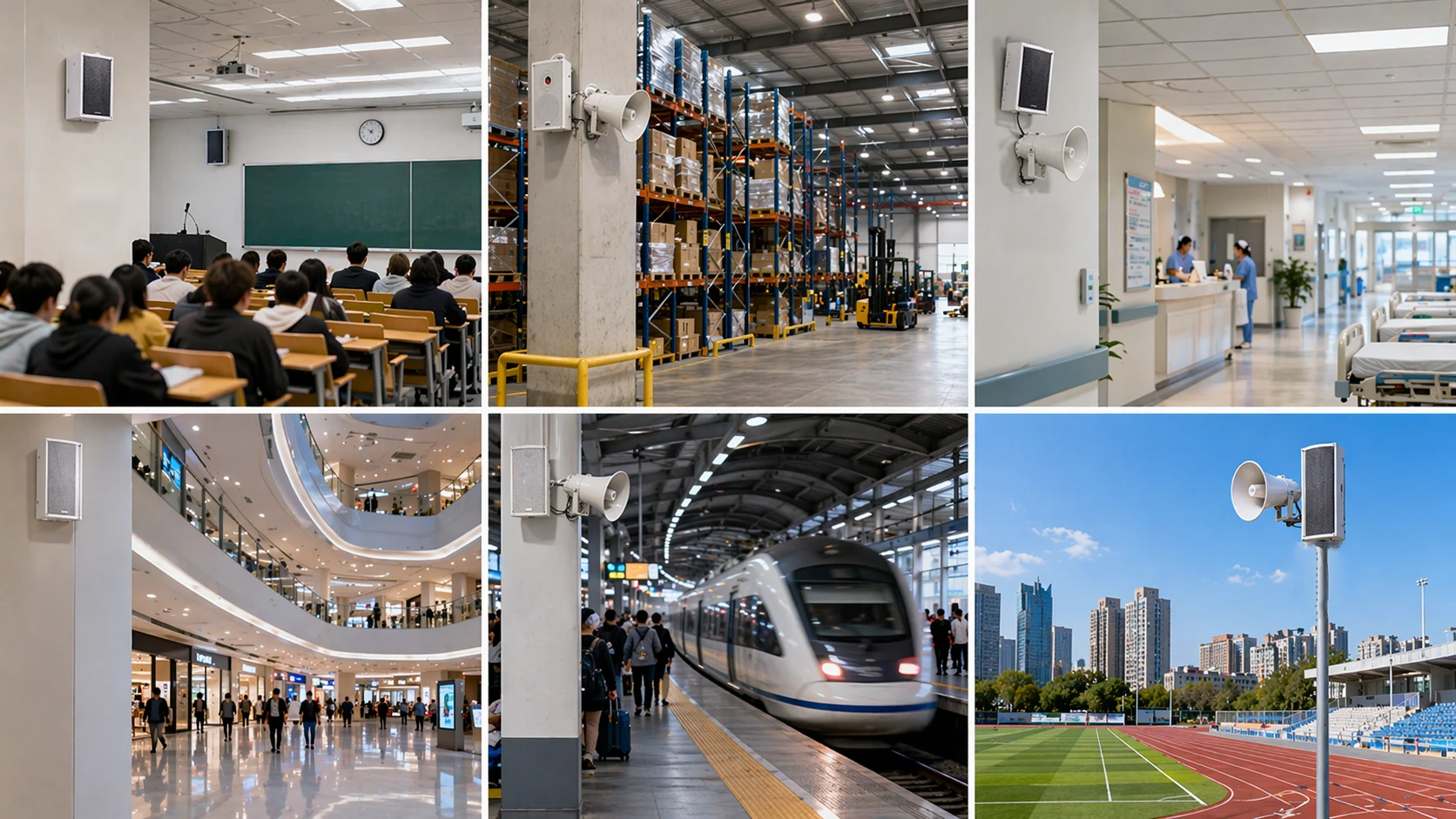
PA systems are widely used in education, industry, healthcare, transportation, and public safety environments.
Why Public Address Systems Still Matter
A Core Tool for Clear and Immediate Communication
Despite the growth of digital messaging, apps, and personal communication devices, the public address system remains essential because it reaches groups of people instantly and directly. Not everyone checks a screen at the right moment, but a clear voice announcement over a well-designed PA system can cut through delay and uncertainty quickly. This makes it one of the most effective tools for real-time site communication.
The system also supports communication equity in shared spaces. Instead of requiring each person to have a phone, login, or message subscription, the announcement is delivered directly to the physical environment. That still matters in workplaces, schools, transit spaces, and emergency situations where immediate group communication is required.
As a result, PA systems continue to hold an important place even in highly networked and digitized facilities.
Increasing Value in SIP and IP-Based Environments
The value of PA systems is rising rather than shrinking because they now integrate more effectively with modern infrastructure. SIP paging, IP speakers, web-managed amplifiers, centralized software, and networked dispatch tools allow PA systems to become smarter and easier to manage. Instead of standing apart from the rest of the communication environment, they can work with phones, intercoms, emergency systems, and control platforms as part of one coordinated architecture.
This makes deployment more flexible and often more scalable. A modern organization can extend announcements across buildings, sites, and operating zones while keeping management centralized. It can also align public address with real operational workflows rather than treating it as a separate legacy subsystem.
That is why the modern PA system is best understood as both an audio platform and a communication infrastructure component.
In today’s facilities, a public address system remains one of the fastest and most effective ways to reach people with information that cannot wait.
FAQ
What is the main purpose of a public address system?
The main purpose is to distribute live or recorded audio announcements to many people across one or more areas quickly and clearly.
How does a PA system differ from an intercom?
A PA system is mainly designed for one-to-many communication, while an intercom is usually intended for two-way communication between individuals or small groups.
Can a modern PA system work with SIP and IP networks?
Yes. Many modern PA systems support SIP paging, IP speakers, network amplifiers, remote management, and integration with telephony and emergency systems.
Where are PA systems most commonly used?
They are commonly used in schools, factories, hospitals, office buildings, shopping centers, transportation hubs, public spaces, and emergency communication environments.